


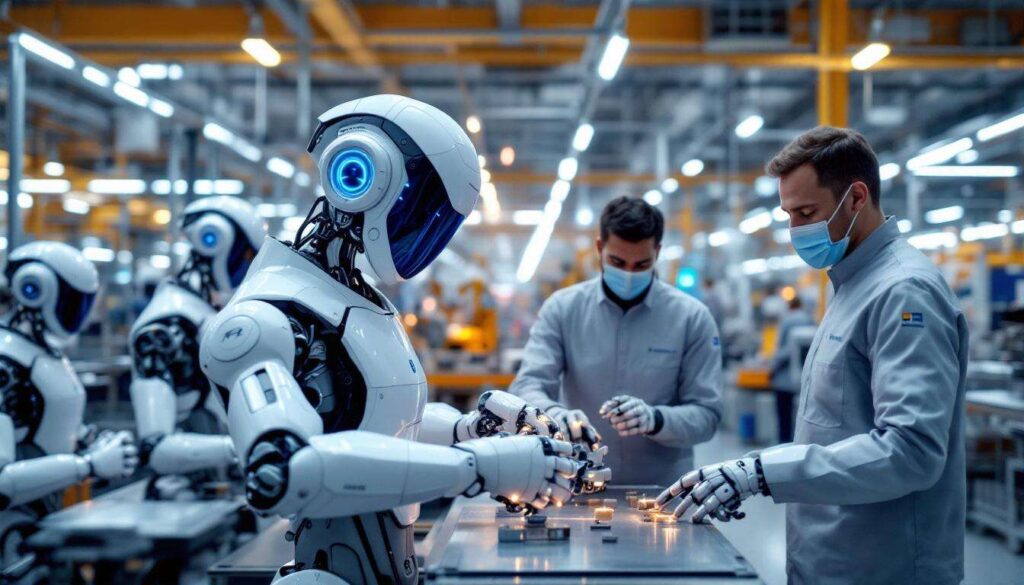
The convergence of artificial intelligence and robotics continues to reshape industrial manufacturing. Google DeepMind and Boston Dynamics have announced a groundbreaking collaboration to deploy Gemini-powered robots within Hyundai’s production facilities, marking a significant step forward in the integration of advanced AI systems into automotive manufacturing environments.
Context of the partnership between Google DeepMind and Boston Dynamics
Strategic alignment of technological expertise
The partnership brings together two industry leaders with complementary strengths. Google DeepMind, renowned for its cutting-edge artificial intelligence research and development, has achieved remarkable breakthroughs in machine learning algorithms and neural networks. Boston Dynamics, meanwhile, has established itself as a pioneer in advanced robotics, creating machines capable of navigating complex environments with unprecedented agility and precision.
This collaboration represents a natural evolution of both companies’ technological trajectories. Boston Dynamics’ robots, including the well-known Spot and Atlas platforms, have demonstrated exceptional physical capabilities. By integrating DeepMind’s Gemini AI technology, these robots gain enhanced cognitive abilities, enabling them to process information, make decisions, and adapt to changing circumstances with greater sophistication.
Hyundai’s role in the collaboration
Hyundai’s involvement extends beyond merely providing testing facilities. As the parent company of Boston Dynamics since acquiring it in 2021, Hyundai has been instrumental in driving the practical application of robotics within industrial settings. The automotive manufacturer’s extensive production infrastructure offers an ideal environment for trialling these advanced systems under real-world conditions.
| Organisation | Primary contribution | Key technology |
|---|---|---|
| Google DeepMind | Artificial intelligence systems | Gemini AI platform |
| Boston Dynamics | Robotic hardware and mobility | Advanced robotic platforms |
| Hyundai | Manufacturing facilities and integration | Production line expertise |
The synergy between these organisations creates a comprehensive ecosystem for developing and deploying next-generation industrial automation solutions, paving the way for exploring the specific goals of this ambitious initiative.
Project objectives in Hyundai factories
Enhancing operational efficiency
The primary objective centres on revolutionising manufacturing processes through intelligent automation. The Gemini-powered robots aim to perform tasks that currently require human intervention or traditional automated systems with limited adaptability. These include quality inspection, materials handling, and complex assembly operations that demand both precision and decision-making capabilities.
Key operational targets include:
- Reducing production cycle times through optimised workflow management
- Minimising defects by implementing AI-driven quality control systems
- Improving workplace safety by assigning hazardous tasks to robotic systems
- Increasing flexibility to accommodate varying production requirements
- Enhancing predictive maintenance capabilities to prevent equipment failures
Developing adaptive manufacturing systems
Unlike conventional industrial robots that follow predetermined routines, the Gemini-powered systems are designed to learn and adapt to their environment. This capability enables them to handle unexpected situations, collaborate with human workers, and continuously improve their performance based on accumulated experience.
The trials will evaluate how effectively these robots can integrate into existing production lines without requiring extensive infrastructure modifications. This adaptability could significantly reduce implementation costs and accelerate adoption across Hyundai’s global manufacturing network, which naturally leads to examining the technological foundation enabling these capabilities.
Gemini technology: explanations and implications
Understanding the Gemini AI platform
Gemini represents Google DeepMind’s most advanced multimodal AI system, capable of processing and understanding diverse types of information simultaneously. This includes visual data from cameras, textual instructions, sensor readings, and spatial information. The platform’s architecture enables robots to comprehend their surroundings holistically rather than relying on isolated data streams.
The technology’s key features include:
- Real-time environmental analysis and object recognition
- Natural language processing for human-robot communication
- Predictive modelling for anticipating workflow requirements
- Continuous learning algorithms that improve performance over time
- Multi-agent coordination for collaborative task execution
Practical applications in manufacturing
Within factory environments, Gemini enables robots to perform complex reasoning tasks previously reserved for human workers. For instance, a robot equipped with this technology can assess component quality, identify potential defects, determine appropriate corrective actions, and communicate findings to supervisory systems or human colleagues.
The implications extend beyond individual task performance. Gemini-powered robots can participate in dynamic production scheduling, adapting to supply chain disruptions, equipment availability, and changing priorities without requiring manual reprogramming. This level of autonomy represents a fundamental shift in how manufacturing systems operate, setting the stage for examining the broader benefits this technology delivers to the automotive sector.
Benefits for the automotive industry and Hyundai
Competitive advantages in production
The integration of AI-powered robotics offers substantial competitive advantages in an industry characterised by tight margins and intense global competition. Hyundai stands to benefit from reduced labour costs in repetitive tasks, improved product consistency, and the ability to rapidly reconfigure production lines for different vehicle models or specifications.
| Benefit category | Traditional automation | Gemini-powered systems |
|---|---|---|
| Adaptability | Limited, requires reprogramming | High, learns continuously |
| Decision-making | Rule-based only | Context-aware reasoning |
| Human collaboration | Minimal, safety barriers required | Enhanced, intuitive interaction |
| Implementation time | Weeks to months | Days to weeks |
Broader industry implications
Success in Hyundai’s facilities could catalyse widespread adoption across the automotive sector. Other manufacturers closely monitor these developments, recognising that falling behind in automation technology could significantly impact their market position. The trials may establish new industry standards for intelligent manufacturing systems.
Beyond automotive applications, the technology demonstrates potential for diverse industrial sectors including electronics assembly, pharmaceutical production, and logistics operations. This versatility increases the commercial viability of continued investment in AI-powered robotics development, which brings attention to the current status and future trajectory of these trials.
State of trials and future prospects
Current implementation phase
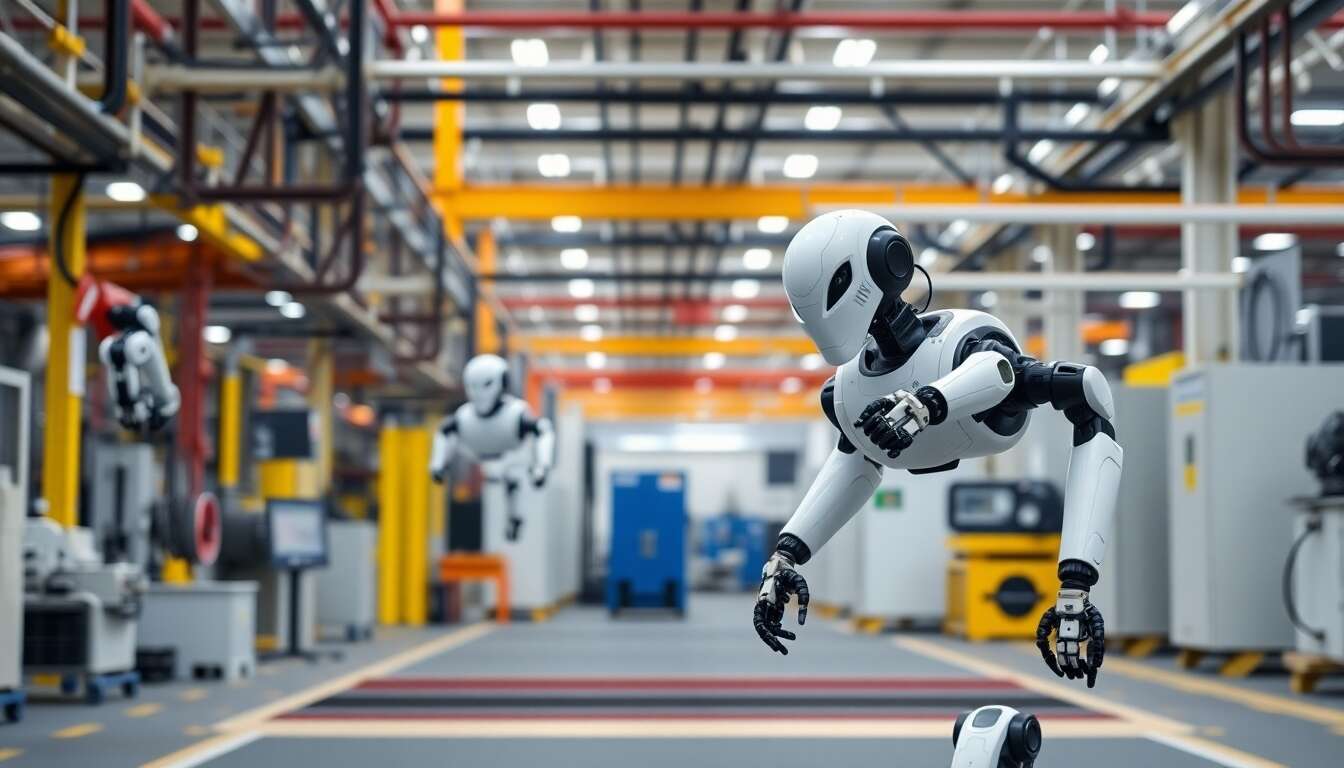
The trials are progressing through carefully structured phases, beginning with controlled testing environments before expanding to active production areas. Initial deployments focus on specific tasks where the technology can demonstrate clear advantages while minimising disruption to existing operations.
Early results indicate promising performance in areas such as visual inspection and materials transport. Engineers are collecting extensive data on system reliability, processing speeds, and integration challenges to refine both hardware and software components.
Timeline and expansion plans
While specific timelines remain subject to trial outcomes, Hyundai has expressed commitment to scaling successful implementations across multiple facilities. The phased approach allows for iterative improvements based on real-world feedback before committing to large-scale deployments.
Future developments may include:
- Expansion to additional Hyundai manufacturing sites globally
- Integration with existing enterprise resource planning systems
- Development of specialised robotic platforms for specific automotive tasks
- Collaboration with supply chain partners to extend automation benefits
- Exploration of applications beyond manufacturing into logistics and service operations
The collaboration between Google DeepMind, Boston Dynamics, and Hyundai represents a significant milestone in industrial automation. By combining advanced AI capabilities with sophisticated robotics in real-world manufacturing environments, this partnership addresses practical challenges whilst pushing technological boundaries. The trials offer valuable insights into how intelligent systems can transform production processes, enhance efficiency, and create safer working environments. As these technologies mature and demonstrate their value, they are likely to become integral components of modern manufacturing infrastructure, reshaping how vehicles and countless other products are produced. The automotive industry’s embrace of AI-powered robotics signals a broader transformation that will influence manufacturing practices across numerous sectors for years to come.