



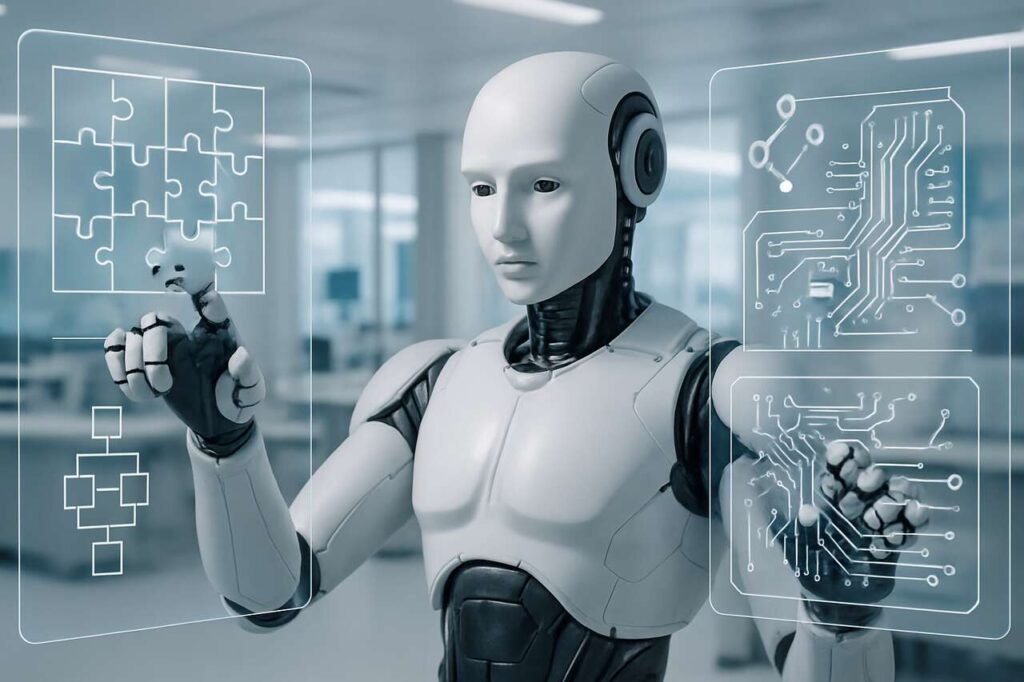
Humanoid robots have long captured the imagination of scientists, engineers and the general public alike. Recent developments emerging from China have demonstrated a remarkable leap forward in robotic learning capabilities, with machines now able to master complex tasks in a matter of hours rather than weeks or months. This breakthrough represents a significant milestone in the field of robotics, showcasing how advanced algorithms and sophisticated hardware can work in tandem to create machines that learn with unprecedented speed and efficiency.
Understanding advancements in humanoid robots in China
China has emerged as a major player in the global robotics arena, investing heavily in research and development to push the boundaries of what humanoid machines can achieve. The latest demonstration features a robot capable of acquiring new skills without extensive pre-programming or lengthy training periods, a feat that has captured international attention.
Key technological breakthroughs
The robot’s design incorporates several innovative features that distinguish it from previous generations of humanoid machines. These advancements include:
- Enhanced sensory systems that provide real-time environmental feedback
- Improved actuators enabling more precise and fluid movements
- Advanced processing units capable of handling complex calculations instantaneously
- Adaptive learning frameworks that require minimal human intervention
Chinese research institutions and technology companies have collaborated extensively to develop these capabilities, pooling resources and expertise to overcome traditional limitations in robotic learning. The result is a machine that can observe, analyse and replicate human actions with remarkable accuracy.
Comparison with previous models
| Feature | Previous Generation | Current Model |
|---|---|---|
| Learning Time | Several weeks | Few hours |
| Setup Requirements | Extensive calibration | Minimal setup |
| Task Complexity | Basic repetitive actions | Complex multi-step processes |
| Adaptability | Limited | Highly flexible |
This technological evolution demonstrates how far the field has progressed in recent times, setting new standards for what can be expected from humanoid robotics platforms.
The new fast learning capabilities
The ability to learn complex skills in mere hours represents a paradigm shift in robotic development. Traditional approaches required extensive programming, repeated trials and significant human oversight to teach robots even simple tasks. The new methodology eliminates many of these barriers.
How rapid learning works
The robot employs a combination of observation-based learning and real-time adaptation. When presented with a new task, the machine uses its sensors to capture detailed information about the environment and the actions being performed. This data is then processed through sophisticated algorithms that identify patterns, predict outcomes and formulate strategies for replication.
Key components of this rapid learning system include:
- Visual recognition systems that track movements with millimetre precision
- Force sensors that detect the exact pressure required for different tasks
- Predictive models that anticipate the consequences of specific actions
- Self-correction mechanisms that adjust performance based on immediate feedback
Practical demonstrations
During recent demonstrations, the robot successfully mastered tasks ranging from delicate object manipulation to coordinated movements requiring balance and precision. These achievements underscore the versatility of the learning system and its potential applications across various domains. The machine’s ability to function without prior setup means it can be deployed quickly in diverse environments, adapting to new challenges as they arise.
These capabilities open up possibilities that were previously considered years away from realisation, bringing practical humanoid assistance closer to everyday reality.
The role of artificial intelligence in progress
Artificial intelligence serves as the foundation for these remarkable learning capabilities. The integration of advanced AI systems enables the robot to process vast amounts of information, make intelligent decisions and continuously improve its performance.
Machine learning algorithms
The robot utilises deep learning networks that mimic certain aspects of human neural processing. These networks can identify complex patterns in sensory data, allowing the machine to understand not just what actions to perform, but why certain approaches work better than others. This level of comprehension enables more efficient learning and better generalisation to new situations.
Neural network architecture
The underlying neural architecture consists of multiple layers that process information hierarchically. Lower layers handle basic sensory input, whilst higher layers integrate this information to form abstract representations of tasks and goals. This structure allows the robot to:
- Recognise objects and their properties quickly
- Understand spatial relationships in three-dimensional environments
- Predict the outcomes of potential actions before executing them
- Transfer knowledge from one task to similar but distinct activities
The synergy between hardware capabilities and intelligent software creates a system that exceeds the sum of its parts, demonstrating how AI can unlock new possibilities in physical robotics.
Implications for industry and everyday life
The practical applications of rapidly learning humanoid robots extend across numerous sectors, promising to transform both industrial operations and domestic environments.
Manufacturing and production
In manufacturing settings, these robots could revolutionise production lines by adapting quickly to new products without extensive reprogramming. This flexibility would reduce downtime during product transitions and enable smaller production runs to become economically viable. Factories could respond more rapidly to market demands, customising products with minimal delays.
Healthcare and assistance
Within healthcare, humanoid robots with rapid learning capabilities could assist with patient care, performing tasks such as:
- Helping patients with mobility challenges
- Delivering medications and supplies efficiently
- Monitoring vital signs and reporting anomalies
- Providing companionship and basic interaction for isolated individuals
Domestic applications
For everyday life, these robots could handle household chores, adapt to individual preferences and learn the specific layout and requirements of different homes. Their ability to master new tasks quickly means they could assist with cooking, cleaning and organisation without requiring extensive user input or configuration.
The potential to enhance quality of life whilst addressing labour shortages in key sectors makes this technology particularly significant for future societal development.
Challenges and future outlook
Despite impressive progress, several challenges remain before humanoid robots can achieve widespread adoption and realise their full potential.
Technical obstacles
Current limitations include battery life constraints, the high cost of sophisticated components and the need for continued refinement of learning algorithms. Additionally, ensuring reliability in unpredictable real-world environments presents ongoing difficulties. Robots must learn to handle unexpected situations gracefully, recovering from errors without human intervention.
Ethical and social considerations
The deployment of increasingly capable robots raises important questions about:
- Employment displacement in sectors where robots could replace human workers
- Privacy concerns related to robots operating in homes and personal spaces
- Safety protocols to prevent accidents or misuse
- Regulatory frameworks to govern robot behaviour and accountability
Future development directions
| Area | Current Status | Future Goal |
|---|---|---|
| Learning Speed | Hours | Minutes |
| Task Range | Specific domains | Universal capability |
| Autonomy | Supervised operation | Fully independent |
| Cost | High | Affordable |
Addressing these challenges will require continued investment in research, thoughtful policy development and ongoing dialogue between technologists, ethicists and the public.
Impact on the global robotics market
China’s advancements in humanoid robotics are reshaping competitive dynamics within the global market, spurring innovation and investment worldwide.
Market growth projections
The humanoid robotics sector is experiencing rapid expansion, with analysts projecting substantial growth over the coming decade. Chinese companies are positioning themselves as leaders in this space, leveraging government support and substantial R&D budgets to accelerate development.
International response
Other nations are responding to these developments by increasing their own investments in robotics research. This competitive environment is driving faster progress across the industry, benefiting the entire field through shared knowledge and parallel innovations. Collaborative projects between international research institutions are also becoming more common, despite competitive pressures.
Commercial opportunities
The commercial potential of rapidly learning humanoid robots has attracted significant venture capital and corporate investment. Companies are exploring applications ranging from elderly care to hazardous environment operations, each representing substantial market opportunities. As costs decrease and capabilities improve, adoption rates are expected to accelerate across multiple sectors simultaneously.
China’s breakthrough in humanoid robot learning represents a significant milestone in robotics development, demonstrating that machines can now acquire complex skills with unprecedented speed and minimal setup requirements. The integration of advanced artificial intelligence with sophisticated hardware has created systems capable of observation-based learning that rivals human adaptability in certain contexts. These developments carry profound implications for manufacturing, healthcare and domestic life, whilst also raising important technical, ethical and social questions that must be addressed. As the global robotics market responds to these innovations with increased investment and competition, the pace of progress is likely to accelerate further. The challenges that remain are substantial but not insurmountable, suggesting that increasingly capable humanoid robots will become a more common presence in various aspects of society over the coming years.