



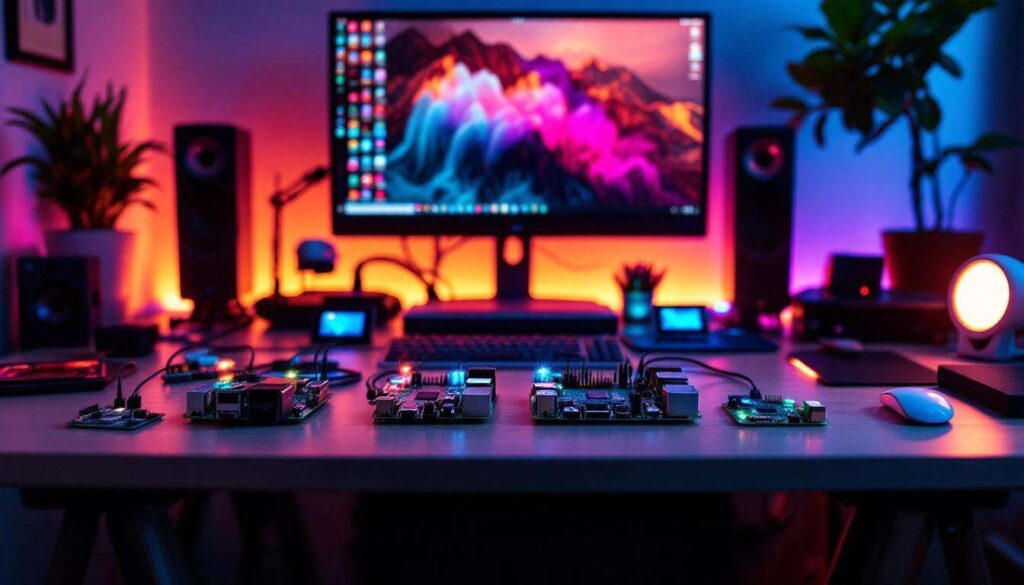
The Raspberry Pi has revolutionised the way hobbyists and tech enthusiasts approach everyday challenges, offering a versatile and affordable platform for countless projects. This credit card-sized computer delivers impressive computing power at a fraction of the cost of traditional systems, making it an ideal solution for those looking to reduce household expenses whilst embracing innovation. From security systems to entertainment hubs, the possibilities are virtually limitless. By investing in a Raspberry Pi and dedicating some time to learning its capabilities, you can create practical solutions that significantly reduce monthly outgoings whilst providing enhanced functionality for your home.
Create a Home Security System with Raspberry Pi
Essential Components and Setup
Building a home security system with a Raspberry Pi requires surprisingly few components and minimal technical expertise. The basic setup includes a Raspberry Pi board, motion sensors, a camera module, and appropriate cabling. Unlike commercial security systems that demand monthly subscription fees ranging from £15 to £50, a DIY Raspberry Pi solution involves only the initial hardware investment, typically under £100. The system can be configured to send alerts directly to your smartphone, record footage locally or to cloud storage, and even integrate with existing smart home devices.
Cost Savings Breakdown
| Security Solution | Initial Cost | Monthly Fee | Annual Total |
|---|---|---|---|
| Commercial System | £200-£500 | £15-£50 | £380-£1,100 |
| Raspberry Pi System | £80-£120 | £0 | £80-£120 |
The financial benefits become even more apparent over time. Within the first year alone, you could save between £300 and £1,000 compared to traditional security services. The open-source nature of Raspberry Pi projects means continuous improvements and updates are available free of charge through the community, ensuring your system remains current without additional costs.
Customisation and Expandability
The beauty of a Raspberry Pi security system lies in its complete customisation. You can add multiple cameras, integrate facial recognition software, or set up specific zones for monitoring. Advanced users can program automated responses, such as turning on lights when motion is detected or sending video clips to designated contacts. This level of personalisation would cost thousands with commercial providers, yet remains accessible and affordable with a DIY approach.
Beyond protecting your property, the skills developed through this project naturally lead to other money-saving applications around the home.
Automate Home Lighting to Reduce Energy Bills
Smart Lighting Control System
A Raspberry Pi can transform your home’s lighting into an intelligent system that responds to your daily routines and environmental conditions. By connecting the device to smart plugs or relay modules, you gain precise control over when lights activate and deactivate. The system can utilise motion sensors to ensure lights only operate when rooms are occupied, or employ light sensors to adjust artificial lighting based on natural daylight availability. This automation eliminates the common problem of lights being left on unnecessarily, which accounts for approximately 11% of the average household’s electricity consumption.
Implementation and Configuration
Setting up automated lighting requires the following components:
- Raspberry Pi board with Wi-Fi capability
- Smart plugs or relay switches compatible with your lighting fixtures
- Motion sensors for occupancy detection
- Ambient light sensors for daylight monitoring
- Basic programming knowledge or pre-configured software solutions
The entire setup typically costs between £60 and £100, depending on the number of rooms you wish to automate. Once configured, the system operates autonomously, learning your patterns and adjusting accordingly. Many users report energy savings of 20-30% on their lighting costs, which translates to approximately £40-£80 annually for the average household.
Advanced Features and Scheduling
Beyond basic automation, a Raspberry Pi lighting system can integrate with weather forecasts to anticipate darker days, create holiday modes that simulate occupancy when you’re away, and even adjust colour temperature throughout the day to support natural circadian rhythms. These features, which would require expensive commercial systems, are achievable through free software and modest hardware additions.
The energy savings achieved through lighting automation complement other cost-reduction strategies, particularly in the realm of home entertainment.
Build a Low-Cost Media Server
Replacing Subscription Services
Streaming services have become a significant household expense, with the average family subscribing to three or more platforms at a combined cost of £30-£50 monthly. A Raspberry Pi media server offers an alternative approach by centralising your legally owned digital media collection. Using software such as Plex, Kodi, or Jellyfin, you can create a professional-grade streaming platform that serves content to any device in your home. The server can organise films, television programmes, music, and photographs, providing a Netflix-like interface without the recurring fees.
Technical Specifications and Performance
The Raspberry Pi 4 Model B with 4GB or 8GB of RAM provides sufficient power for smooth media streaming, including high-definition content. When paired with an external hard drive or network-attached storage, you can store hundreds of films and thousands of songs. The total investment typically ranges from £80 to £150, depending on storage capacity requirements. This one-time expense pays for itself within three to four months when compared to multiple streaming subscriptions.
| Solution | Setup Cost | Monthly Cost | Year One Total |
|---|---|---|---|
| Three Streaming Services | £0 | £35 | £420 |
| Raspberry Pi Media Server | £120 | £0 | £120 |
Additional Capabilities
Beyond media playback, your Raspberry Pi server can record live television with the appropriate tuner hardware, download podcasts automatically, and even serve as a home karaoke system. The server operates silently, consumes minimal electricity (approximately £3 annually), and can be accessed remotely when properly configured, allowing you to enjoy your media library whilst travelling.
Visual monitoring represents another area where Raspberry Pi technology delivers substantial savings over commercial alternatives.
Set Up a Connected Camera Surveillance System
Multi-Camera Network Configuration
Expanding beyond a single security camera, a Raspberry Pi can orchestrate an entire surveillance network covering multiple areas of your property. Each camera unit consists of a Raspberry Pi Zero with camera module, offering remarkable affordability at approximately £30 per camera point. The system can record continuously or trigger recording based on motion detection, storing footage locally or uploading to cloud storage. Professional installation of a comparable four-camera system would typically cost £600-£1,200, whereas a DIY Raspberry Pi solution requires an investment of around £150-£200.
Software and Monitoring Options
Several excellent open-source applications facilitate camera management:
- MotionEyeOS for straightforward setup and web-based viewing
- ZoneMinder for advanced motion detection and alert configuration
- Shinobi for professional-grade features and scalability
- RPi Cam Web Interface for lightweight, efficient operation
These platforms provide real-time viewing from any internet-connected device, customisable motion zones, and automated alert systems. The absence of monthly fees represents a significant advantage, as commercial cloud-based camera systems typically charge £5-£15 per camera monthly for similar functionality.
Privacy and Data Control
Unlike commercial systems that store footage on corporate servers, a Raspberry Pi surveillance system keeps your data entirely under your control. You determine retention periods, access permissions, and storage locations, ensuring complete privacy. This autonomy also eliminates concerns about service discontinuation or price increases that plague subscription-based alternatives.
Environmental monitoring provides yet another practical application for this versatile platform.
Establish a Personal Weather Station
Meteorological Data Collection
A Raspberry Pi weather station transforms your home into a localised meteorological centre, providing hyper-accurate data specific to your exact location. By connecting various sensors measuring temperature, humidity, barometric pressure, wind speed, and rainfall, you gain insights that generic weather services cannot match. This information proves invaluable for gardening decisions, energy management, and planning outdoor activities. Commercial weather stations with similar capabilities cost £200-£500, whilst a Raspberry Pi solution can be assembled for £60-£100.
Sensor Integration and Data Logging
The system collects continuous measurements and stores historical data, allowing you to identify patterns and trends over time. This information can guide practical money-saving decisions, such as optimal timing for heating system activation based on accurate temperature forecasts, or irrigation scheduling that responds to actual rainfall rather than estimates. The weather station can also trigger automated responses in other smart home systems, such as closing motorised blinds when temperature sensors detect excessive heat.
Sharing and Visualisation
Your weather data can be displayed on customised dashboards, shared with weather networks such as Weather Underground, or integrated with home automation platforms. Many users find satisfaction in contributing to citizen science projects whilst simultaneously benefiting from precise local forecasting that helps reduce heating, cooling, and water consumption costs.
The Raspberry Pi platform demonstrates that technology need not be expensive to be effective. Each project outlined here addresses genuine household expenses whilst providing learning opportunities and practical skills. The initial investment in hardware and time yields ongoing savings that accumulate substantially over the years. Whether you implement one project or all five, you’ll discover that the Raspberry Pi offers exceptional value, combining affordability with capability in ways that few technologies can match. The community support, extensive documentation, and continuous development ensure these solutions remain viable and improvable long into the future, making them genuinely sustainable approaches to household cost reduction.