



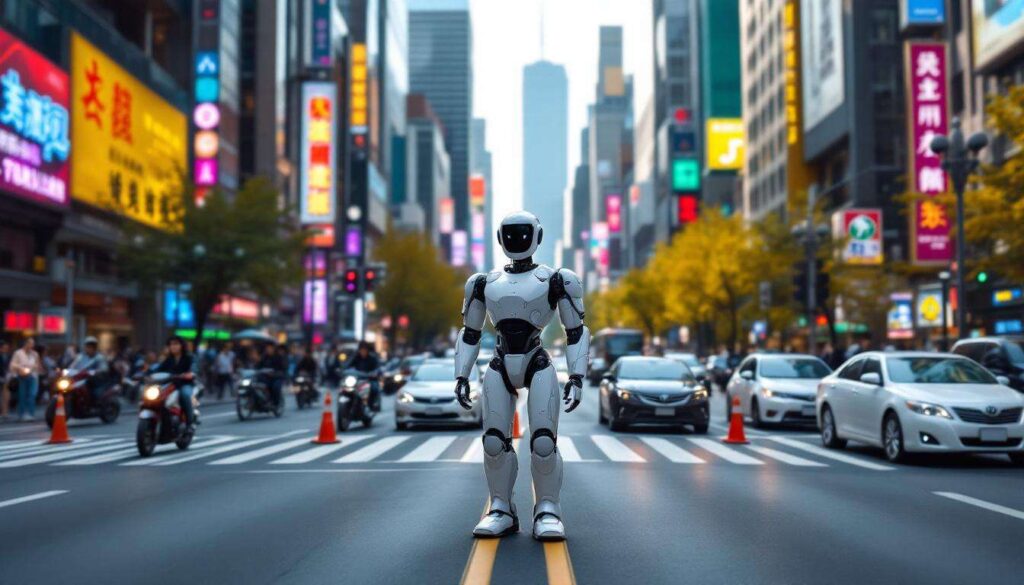
Urban centres across China are witnessing a remarkable transformation in traffic management as autonomous robots take to the streets to guide vehicles and pedestrians. These mechanical officers represent a significant leap forward in the application of artificial intelligence and robotics to everyday public safety challenges. Equipped with sophisticated sensors and communication systems, these traffic robots are designed to alleviate congestion, reduce accidents, and improve overall road safety in densely populated areas. The deployment marks a pivotal moment in the evolution of smart city infrastructure, where technology increasingly supplements or replaces traditional human-operated systems.
Introduction of robots in traffic management in China
Pioneering deployment in major cities
Chinese authorities have initiated pilot programmes in several metropolitan areas, introducing traffic robots at key intersections and busy pedestrian crossings. These autonomous units stand approximately 1.7 metres tall and feature a humanoid design that makes them immediately recognisable to road users. The robots have been strategically positioned in locations where traffic volume is particularly high or where human traffic officers face challenging working conditions, such as extreme weather or hazardous pollution levels.
Government support and regulatory framework
The implementation of robotic traffic management systems has received substantial backing from municipal and provincial governments. Authorities have established comprehensive guidelines governing the operation of these devices, including protocols for emergency situations and integration with existing traffic control infrastructure. The regulatory framework addresses liability concerns and ensures that the robots complement rather than completely replace human oversight. This measured approach reflects China’s broader strategy of gradually introducing automation whilst maintaining public confidence and safety standards.
The technical foundations supporting these robots naturally lead to an examination of their specific capabilities and operational features.
Advanced features of traffic robots
Sensor technology and environmental awareness
Traffic robots incorporate multiple sensor arrays that enable comprehensive environmental monitoring. These include high-resolution cameras, LiDAR systems, and infrared detectors that function effectively in various weather conditions and lighting scenarios. The sensors continuously scan a 360-degree radius, detecting vehicles, pedestrians, cyclists, and potential obstacles. This real-time data collection allows the robots to make informed decisions about traffic flow management and respond to changing conditions within milliseconds.
| Feature | Specification | Purpose |
|---|---|---|
| Camera resolution | 4K multi-angle | Vehicle identification and monitoring |
| LiDAR range | 50 metres | Distance measurement and obstacle detection |
| Processing speed | 100 milliseconds | Real-time decision making |
| Operating temperature | -20°C to 45°C | All-weather functionality |
Communication and coordination capabilities
The robots utilise advanced communication systems to interact with road users and traffic infrastructure. Visual displays show clear directional signals, whilst integrated speakers broadcast verbal instructions in multiple languages. Connectivity to central traffic management systems allows the robots to coordinate with traffic lights, receive updates about incidents, and adjust their behaviour based on broader network conditions. This interconnected approach ensures that individual robots contribute to a cohesive traffic management strategy across entire districts.
Understanding these technical capabilities provides context for evaluating their practical effects on daily traffic patterns.
Impact on urban traffic flow
Measurable improvements in congestion
Early data from deployment zones indicates notable reductions in traffic congestion during peak hours. Monitoring systems have recorded average decreases of 15 to 20 per cent in vehicle waiting times at intersections where robots operate. The consistent application of traffic rules and the elimination of human error in signal timing contribute to smoother vehicle flow. Pedestrians also benefit from more predictable crossing opportunities, as the robots maintain strict adherence to designated crossing phases.
Safety enhancements and accident reduction
Statistical analysis from pilot areas reveals encouraging trends in road safety. The presence of traffic robots correlates with fewer minor collisions and a reduction in pedestrian incidents. Key factors contributing to these improvements include:
- Continuous monitoring without fatigue or distraction
- Immediate detection of traffic violations and hazardous behaviour
- Consistent enforcement of traffic regulations
- Enhanced visibility at night through illuminated displays
- Rapid response to emergency situations requiring traffic diversion
These operational benefits naturally prompt questions about how the public has received this technological innovation.
Reactions of pedestrians and drivers
Public acceptance and curiosity
Initial reactions from road users have been predominantly positive, with many expressing fascination with the novelty of robotic traffic management. Surveys conducted in deployment areas indicate that approximately 70 per cent of respondents view the robots favourably, appreciating their reliability and impartiality. Younger demographics particularly embrace the technology, whilst older citizens demonstrate more cautious acceptance. The robots have become minor tourist attractions in some locations, with visitors photographing the devices and observing their operations.
Concerns and scepticism
Despite general acceptance, some road users express reservations about the technology. Common concerns include doubts about the robots’ ability to handle complex or unpredictable situations that require human judgement. Others worry about potential technical malfunctions that could create dangerous situations. There are also questions about privacy implications related to the extensive surveillance capabilities of the robots. Authorities have addressed these concerns through public information campaigns and by maintaining human supervisors who can intervene when necessary.
These varied responses highlight the importance of addressing the technical obstacles that accompany such innovations.
Technological challenges and issues
Technical limitations and reliability
Despite their sophisticated design, traffic robots face several operational challenges. Extreme weather conditions, particularly heavy rain, fog, or snow, can impair sensor accuracy and reduce the effectiveness of visual displays. The robots require regular maintenance to ensure optimal performance, including cleaning of sensor lenses and software updates. Battery life limitations necessitate charging infrastructure, and some units have experienced unexpected shutdowns during extended operation periods. Engineers continue to refine the technology to address these practical constraints and improve overall reliability.
Integration with existing infrastructure
Incorporating robots into established traffic systems presents coordination challenges. Existing traffic light sequences, road markings, and signage must be compatible with robotic operations. In some locations, infrastructure modifications have been necessary to accommodate the robots effectively. There are also considerations regarding how the robots interact with emergency vehicles, public transport, and special events that require temporary traffic arrangements. Achieving seamless integration demands ongoing collaboration between technology developers, urban planners, and traffic management authorities.
Addressing these challenges is essential for realising the full potential of automated traffic systems in the coming years.
Future prospects for traffic automation
Expansion plans and scalability
Chinese authorities have announced ambitious plans to expand traffic robot deployment across additional cities and regions. The success of pilot programmes has generated confidence in the technology’s viability for widespread implementation. Future iterations are expected to incorporate enhanced artificial intelligence capabilities, enabling more sophisticated decision-making and better adaptation to local traffic patterns. Developers are also exploring smaller, more specialised units for residential areas and larger models for major thoroughfares and motorway junctions.
Integration with autonomous vehicle networks
The long-term vision for traffic automation involves creating comprehensive smart transportation ecosystems where robots communicate directly with autonomous vehicles. This vehicle-to-infrastructure communication would enable predictive traffic management, with robots adjusting signals based on approaching vehicle data. Such integration could dramatically reduce congestion and accidents whilst optimising fuel efficiency and reducing emissions. The development of standardised communication protocols remains a priority for achieving this interconnected future.
The deployment of traffic robots in Chinese cities represents a significant milestone in urban traffic management innovation. These autonomous systems demonstrate tangible benefits in reducing congestion, improving safety, and maintaining consistent traffic regulation enforcement. Whilst technological challenges and public concerns require ongoing attention, the positive results from pilot programmes suggest that robotic traffic management will become increasingly prevalent. As artificial intelligence capabilities advance and integration with broader smart city infrastructure deepens, traffic robots may fundamentally transform how urban populations navigate their daily journeys. The balance between technological capability and human oversight will remain crucial as this technology continues to evolve and expand across China and potentially to other nations seeking innovative solutions to traffic management challenges.