



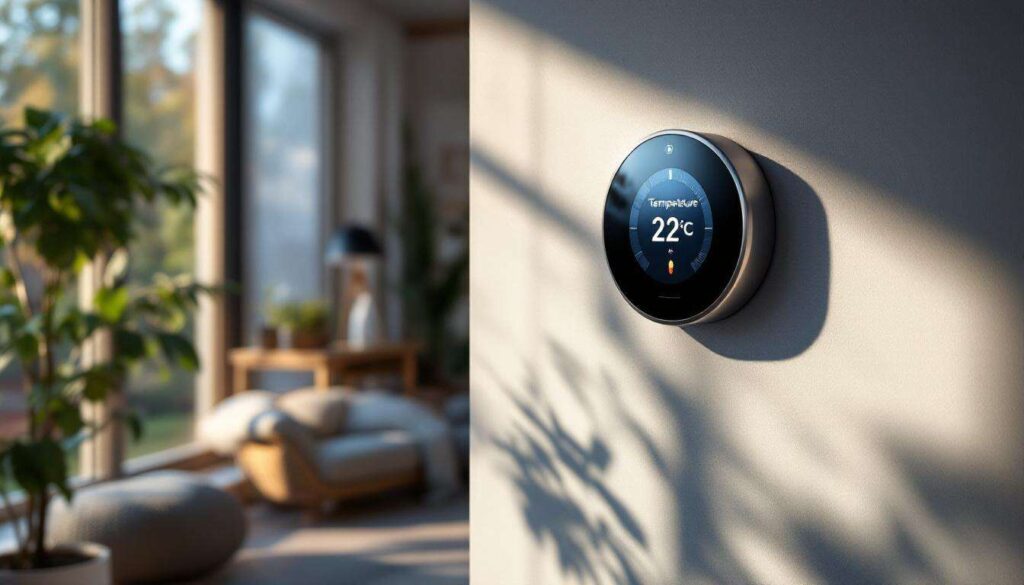
The evolution of home heating has reached a pivotal moment. Modern households increasingly demand systems that not only maintain comfortable temperatures but also operate intelligently, adapting to daily routines whilst minimising energy consumption. Smart thermostats have emerged as the cornerstone of this transformation, offering homeowners unprecedented control over their heating systems through connected technology and automated decision-making. These devices promise to eliminate the inefficiencies of traditional heating controls, replacing manual adjustments with sophisticated algorithms that learn, predict, and respond to both environmental conditions and occupancy patterns.
Introduction to smart thermostats
Understanding the technology
Smart thermostats represent a fundamental shift in domestic heating management. Unlike conventional thermostats that simply switch heating on or off based on a fixed temperature threshold, these devices incorporate sensors, wireless connectivity, and computational intelligence to create a responsive heating ecosystem. The system typically comprises several components:
- A central controller with display and user interface
- Temperature and humidity sensors positioned throughout the property
- A receiver unit that communicates with the boiler or heating system
- Cloud-based software that processes data and enables remote access
Core operational principles
The functionality of smart thermostats follows a continuous cycle of measurement, analysis, and action. Room sensors constantly monitor environmental conditions, transmitting data to the central controller. This information feeds into algorithms that consider multiple variables: current temperature, desired settings, occupancy status, weather forecasts, and historical patterns. The system then determines the optimal heating schedule, sending commands to the boiler through the receiver unit. This automated decision-making process eliminates the guesswork associated with traditional heating controls, ensuring comfort whilst avoiding unnecessary energy expenditure.
These technological foundations enable smart thermostats to deliver benefits that extend beyond simple temperature regulation, setting the stage for examining specific products available in the market.
The best options of 2023
Market landscape and leading models
The smart thermostat market has matured significantly, with manufacturers offering devices tailored to different heating systems and household requirements. Leading options distinguish themselves through reliability, feature sets, and compatibility with existing infrastructure. Several models have gained particular recognition for their performance and user satisfaction:
| Feature category | Entry-level models | Premium models |
|---|---|---|
| Temperature control | Basic scheduling | AI-based learning and zoning |
| Connectivity | Wi-Fi only | Multi-protocol support |
| Sensors | Single unit | Multiple room sensors |
| Integration | Limited voice control | Full smart home ecosystem |
Specialised solutions
Recent innovations have addressed specific heating configurations. The Cielo Breez Edge Pro exemplifies this trend, designed specifically for ductless systems with AI-based zoning control. Such specialised devices ensure optimal performance for non-traditional heating setups, avoiding the compromises inherent in one-size-fits-all solutions. These targeted products demonstrate the industry’s maturation, with manufacturers recognising that diverse housing stock requires tailored approaches rather than universal devices.
With an understanding of available products, attention naturally turns to the practical considerations of bringing these systems into existing homes.
Installation and compatibility
Pre-installation assessment
Before purchasing a smart thermostat, homeowners must evaluate their current heating system’s compatibility. Critical factors include:
- Boiler type: combi, system, or conventional
- Existing wiring configuration and voltage requirements
- Presence of a common wire (C-wire) for continuous power
- Heating zones and whether multi-zone control is desired
Many modern smart thermostats accommodate various configurations, but older heating systems may require additional components or professional modification. Manufacturers typically provide online compatibility checkers, though consulting a qualified heating engineer ensures accurate assessment and prevents costly mistakes.
Installation process
Installation complexity varies considerably. Some models offer straightforward replacement of existing thermostats, with colour-coded wiring and step-by-step guidance through companion apps. Others, particularly those incorporating multiple room sensors or advanced zoning capabilities, demand more extensive setup. Professional installation remains advisable for households lacking electrical experience, ensuring both safety and optimal system configuration. The installation process typically involves removing the old thermostat, mounting the new base plate, connecting wires according to the manufacturer’s diagram, and completing software setup through the associated mobile application.
Once installed, the true capabilities of these devices become apparent through their operational features and measurable performance.
Features and results
Learning algorithms and adaptive scheduling
The most sophisticated smart thermostats employ machine learning to establish heating patterns that align with household routines. During an initial learning period, the system observes manual adjustments and occupancy patterns, gradually building a model of preferences. This algorithmic approach eliminates the need for complex programming, as the thermostat automatically creates schedules that anticipate requirements. Advanced models incorporate additional data sources:
- Weather forecasts to pre-heat before temperature drops
- Geolocation data from smartphones to detect when residents leave or approach home
- Load compensation that adjusts for thermal inertia in the building
- Integration with renewable energy systems to optimise heating during low-cost periods
Remote control and monitoring
Smartphone applications provide comprehensive control regardless of location. Users can adjust temperatures, modify schedules, and receive alerts about system performance or potential issues. This remote accessibility proves particularly valuable for households with irregular schedules or frequent travel. The ability to ensure heating is off when the property is unoccupied, or to warm the home before arrival, represents a significant improvement over traditional timers that operate on fixed schedules regardless of actual occupancy.
Operating mode considerations
Understanding the distinction between operating modes maximises efficiency. The On mode maintains continuous fan operation, providing constant air circulation and filtration but consuming more energy. The Auto mode activates the system only when temperature adjustment is required, cycling the fan on and off accordingly. For most households, Auto mode delivers superior energy efficiency whilst maintaining comfort, though those prioritising air quality may prefer continuous operation despite higher costs.
These features translate into tangible benefits, particularly in the realm of energy consumption and cost reduction.
Energy savings and efficiency
Quantifying savings potential
Smart thermostats deliver measurable reductions in heating costs through several mechanisms. Proactive management ensures heating operates only when necessary, eliminating the waste associated with fixed schedules that ignore actual occupancy. Studies indicate potential savings ranging from 10% to 30% on heating bills, though actual results depend on previous heating habits, property insulation, and climate conditions.
| Efficiency feature | Energy impact | Typical savings |
|---|---|---|
| Occupancy detection | Reduces unnecessary heating | 8-12% |
| Weather compensation | Optimises pre-heating | 5-8% |
| Zoning control | Heats only occupied areas | 15-25% |
| Remote adjustments | Prevents heating empty homes | 10-15% |
Long-term efficiency gains
Beyond immediate cost reductions, smart thermostats contribute to sustainable energy practices. Integration with renewable energy systems allows heating to align with periods of high solar or wind generation, reducing reliance on fossil fuels. Some advanced models communicate with energy suppliers, participating in demand-response programmes that shift consumption away from peak periods. These capabilities position smart thermostats as essential components of broader efforts to decarbonise domestic energy use.
The efficiency benefits of smart thermostats are amplified when these devices function as part of a broader connected home infrastructure.
Smart home ecosystem
Integration with voice assistants
Modern smart thermostats typically support major voice control platforms, enabling hands-free temperature adjustments through simple commands. This integration extends beyond basic control, allowing users to incorporate heating into broader automation routines. For example, a “good morning” routine might simultaneously adjust the thermostat, open blinds, and activate lighting, creating a coordinated start to the day.
Cross-device coordination
The true potential of smart thermostats emerges when they communicate with other connected devices. Occupancy sensors throughout the home can inform the thermostat of actual room usage, enabling precise zoning without manual input. Smart windows might signal when they’re opened, prompting the heating system to pause rather than waste energy. Integration with home security systems allows the thermostat to enter an energy-saving mode when the property is armed, automatically resuming normal operation upon disarming.
- Coordination with smart lighting for comprehensive energy management
- Integration with air quality monitors to balance heating and ventilation
- Communication with solar panels and battery storage systems
- Synchronisation with smart plugs to manage supplementary heating devices
These interconnections transform individual smart devices into a cohesive system that optimises comfort, convenience, and efficiency across the entire home environment.
Smart thermostats have fundamentally altered domestic heating management, shifting control from manual intervention to intelligent automation. The technology combines sophisticated sensors, learning algorithms, and wireless connectivity to deliver comfort whilst substantially reducing energy consumption. Available models range from straightforward replacements for traditional thermostats to advanced systems offering multi-zone control and integration with renewable energy sources. Installation requirements vary, with compatibility assessment essential before purchase. The measurable benefits include significant reductions in heating costs, typically between 10% and 30%, achieved through occupancy detection, weather compensation, and remote control capabilities. When incorporated into broader smart home ecosystems, these devices enable coordinated automation that extends efficiency gains beyond heating alone. As the technology continues to evolve, smart thermostats represent not merely an upgrade to existing heating controls but a fundamental reimagining of how homes maintain comfort whilst minimising environmental impact and operational costs.