


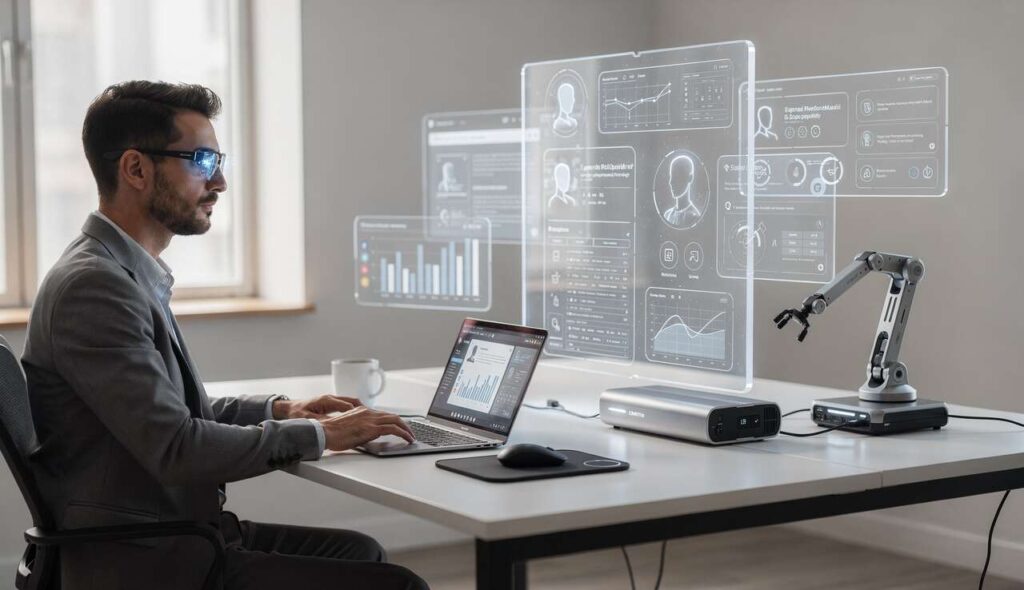
The technological landscape continues to evolve at an unprecedented pace, with groundbreaking innovations reshaping how we interact with the world around us. From artificial intelligence systems that anticipate our needs to wearable devices that blend seamlessly into our daily routines, the convergence of multiple technological advances promises to transform both personal and professional spheres. As computing power increases and battery technology matures, we stand on the threshold of a new era where digital assistance becomes truly intelligent, visual interfaces extend beyond traditional screens, and energy storage solutions enable longer-lasting, more sustainable devices. These developments represent not merely incremental improvements but fundamental shifts in how technology serves humanity.
Intelligent agents: aI revolution in 2026
Understanding the evolution of aI agents
Artificial intelligence agents have progressed significantly beyond simple voice assistants and chatbots. These sophisticated systems now possess the capability to understand context, learn from interactions, and execute complex tasks with minimal human intervention. Unlike their predecessors, modern aI agents demonstrate genuine reasoning abilities, allowing them to navigate ambiguous situations and make informed decisions based on vast datasets and learned patterns. The transformation from reactive tools to proactive partners marks a fundamental shift in human-computer interaction.
Key capabilities of next-generation aI agents
The latest generation of intelligent agents brings several revolutionary features that distinguish them from earlier iterations:
- Multi-modal understanding that processes text, images, audio, and video simultaneously
- Persistent memory systems that recall previous interactions and preferences
- Autonomous task completion without constant user supervision
- Cross-platform integration enabling seamless operation across devices
- Predictive capabilities that anticipate needs before explicit requests
These capabilities enable aI agents to function as true digital assistants, managing schedules, conducting research, drafting communications, and coordinating complex workflows. The technology has matured to the point where agents can handle intricate projects requiring multiple steps and decision points.
Practical applications across industries
| Industry | Application | Efficiency Gain |
|---|---|---|
| Healthcare | Patient monitoring and diagnostic support | 40-60% |
| Finance | Fraud detection and portfolio management | 50-70% |
| Manufacturing | Predictive maintenance and quality control | 35-55% |
| Retail | Personalised customer service and inventory optimisation | 30-50% |
The widespread adoption of intelligent agents has created new opportunities for businesses to streamline operations whilst simultaneously improving service quality. These systems handle routine tasks with remarkable efficiency, freeing human workers to focus on creative and strategic responsibilities that require emotional intelligence and nuanced judgement.
As intelligent agents become more sophisticated, their integration with other emerging technologies creates synergies that amplify their utility, particularly when combined with advanced visual interfaces.
The rise of smart glasses: between augmented reality and everyday life
From novelty to necessity
Smart glasses have undergone a remarkable transformation from bulky prototypes to sleek, practical devices that people actually want to wear. Modern designs prioritise comfort and aesthetics whilst incorporating powerful computing capabilities within lightweight frames. The latest models weigh less than traditional prescription glasses, addressing one of the primary barriers to adoption. Manufacturers have successfully balanced functionality with fashion, creating devices that enhance rather than detract from personal style.
Core features driving adoption
Contemporary smart glasses offer an impressive array of capabilities that justify their growing popularity:
- Heads-up displays providing contextual information without obstructing vision
- Real-time translation of foreign languages during conversations
- Navigation guidance with directional arrows overlaid on the actual environment
- Hands-free photography and video recording from a first-person perspective
- Biometric monitoring including heart rate and activity tracking
- Seamless integration with smartphones and other connected devices
The augmented reality features prove particularly valuable in professional settings, where workers can access instructions, schematics, or data without interrupting their tasks. Surgeons consult patient information during procedures, technicians view repair guides whilst working on equipment, and warehouse staff locate items through visual prompts.
Consumer adoption patterns
Market research indicates that smart glasses appeal to diverse demographic groups for different reasons. Younger users embrace the social media integration and content creation possibilities, whilst older consumers appreciate accessibility features such as text magnification and audio enhancement. Professionals value productivity tools, and fitness enthusiasts monitor performance metrics during activities.
The technology’s maturation coincides with improvements in battery performance, which extends usage time and addresses another significant concern among potential users.
Next-gen batteries: towards more sustainable technologies
Breaking through lithium-ion limitations
Battery technology has long represented a bottleneck in portable electronics development. Traditional lithium-ion batteries, whilst reliable, suffer from inherent limitations including degradation over time, safety concerns related to thermal runaway, and environmental impacts from mining operations. Next-generation battery technologies address these shortcomings through innovative chemistries and manufacturing processes that deliver superior performance whilst reducing ecological footprints.
Emerging battery technologies
Several promising alternatives have progressed from laboratory curiosities to commercially viable products:
| Technology | Energy Density | Lifespan | Key Advantage |
|---|---|---|---|
| Solid-state batteries | 2-3x higher | 5,000+ cycles | Enhanced safety |
| Sodium-ion batteries | Similar to Li-ion | 3,000+ cycles | Abundant materials |
| Lithium-sulphur batteries | 3-5x higher | 1,500+ cycles | Lower cost |
| Graphene batteries | 2x higher | 4,000+ cycles | Rapid charging |
Solid-state batteries have generated particular excitement due to their exceptional safety profile. By replacing liquid electrolytes with solid materials, these batteries eliminate leakage risks and tolerate higher temperatures. The technology enables devices to operate longer between charges whilst occupying less space.
Environmental and economic implications
The shift towards alternative battery chemistries carries significant sustainability benefits. Sodium-ion batteries utilise materials abundant in seawater, reducing dependence on limited lithium reserves concentrated in specific geographical regions. This diversification strengthens supply chains and potentially lowers costs as production scales increase. Manufacturing processes for next-generation batteries generate fewer harmful byproducts and consume less energy compared to conventional approaches.
These advances in energy storage technology enable the other innovations discussed here to reach their full potential in practical, everyday applications.
Impact of emerging technologies on our daily lives
Transforming personal productivity
The convergence of intelligent agents, smart glasses, and improved batteries creates a powerful ecosystem that fundamentally alters how individuals manage their time and tasks. Users can delegate routine responsibilities to aI agents that operate continuously in the background, receive contextual information through augmented reality displays, and rely on devices that maintain charge throughout extended periods of use. This combination eliminates many friction points that previously hindered digital tools from delivering on their promises.
Reshaping professional environments
Workplaces experience particularly dramatic transformations as these technologies mature. Remote collaboration becomes more effective when participants access shared augmented reality spaces that simulate physical presence. Knowledge workers leverage intelligent agents to conduct research, prepare reports, and coordinate schedules across time zones. Field technicians diagnose and repair equipment more efficiently with hands-free access to expert systems and documentation.
- Reduced time spent on administrative tasks allows focus on creative work
- Enhanced accessibility features enable broader workforce participation
- Improved work-life balance through efficient task management
- Decreased environmental impact from optimised resource utilisation
Social and cultural considerations
Beyond practical benefits, these technologies influence social dynamics and cultural norms. The constant availability of information through smart glasses raises questions about attention and presence in social situations. Intelligent agents that learn personal preferences may inadvertently reinforce existing biases or limit exposure to diverse perspectives. Battery improvements enable always-on connectivity, blurring boundaries between work and personal time.
Understanding these impacts helps society navigate the opportunities and challenges that accompany rapid technological advancement.
Challenges and opportunities of technological innovation in 2026
Privacy and security concerns
As devices become more capable and interconnected, they necessarily collect and process vast quantities of personal data. Smart glasses with cameras raise concerns about surreptitious recording and facial recognition. Intelligent agents require access to communications, calendars, and browsing history to function effectively. These capabilities create potential vulnerabilities that malicious actors might exploit. Robust encryption, transparent data policies, and user controls represent essential safeguards, yet implementing them without compromising functionality remains technically challenging.
Digital divide and accessibility
Advanced technologies risk exacerbating existing inequalities if access remains limited to affluent populations. The benefits of intelligent agents, smart glasses, and efficient batteries should extend across socioeconomic boundaries. Initiatives to ensure equitable access include:
- Subsidised devices for low-income individuals and underserved communities
- Open-source alternatives to proprietary systems
- Infrastructure investments in areas with limited connectivity
- Educational programmes to build digital literacy
Regulatory frameworks and ethical guidelines
Policymakers face the complex task of crafting regulations that protect consumers whilst fostering innovation. Overly restrictive rules might stifle beneficial developments, whereas insufficient oversight could enable harmful applications. International cooperation becomes crucial as technologies transcend national borders. Industry self-regulation through ethical guidelines and best practices complements governmental oversight, creating a multi-layered approach to responsible development.
Economic opportunities
Despite challenges, these technologies create substantial economic opportunities. New industries emerge around application development, device manufacturing, and service provision. Existing businesses enhance efficiency and customer experiences through strategic technology adoption. The transition to sustainable battery technologies spawns green jobs in recycling and materials processing. Investment in research and development drives scientific advancement with spillover benefits across sectors.
The technological innovations reshaping our world bring profound changes that extend far beyond individual gadgets or applications. Intelligent agents, smart glasses, and next-generation batteries represent interconnected advances that collectively enhance human capabilities whilst presenting complex challenges. Successfully navigating this transformation requires balancing enthusiasm for progress with thoughtful consideration of societal impacts. As these technologies mature and proliferate, their true measure lies not in technical specifications but in their capacity to improve lives, expand opportunities, and contribute to a more sustainable and equitable future. The coming years will determine whether these powerful tools fulfil their potential to serve humanity’s best interests.