



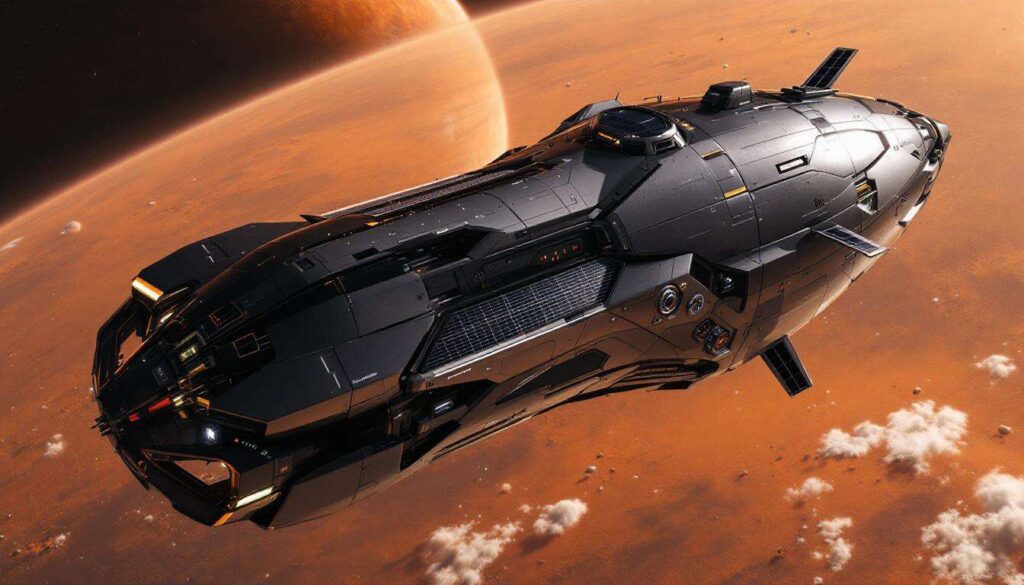
The prospect of sending humans to Mars has captured imaginations for decades, but recent developments suggest this ambitious goal may soon become reality. European space experts are now sharing detailed insights into what the first crewed spacecraft bound for the red planet might look like. These plans represent years of research, technological innovation, and international cooperation. Drawing on expertise from aerospace engineering, life support systems, and planetary science, European specialists are helping to shape the vehicles that could carry humanity’s first Martian explorers across millions of kilometres of space.
European vision for Martian exploration
Strategic priorities for Mars missions
The European Space Agency has established a comprehensive framework for contributing to crewed Mars exploration. This vision emphasises sustainability, scientific rigour, and technological advancement. European experts advocate for a phased approach that builds upon existing capabilities whilst developing new systems specifically designed for the unique challenges of interplanetary travel.
Key priorities within the European vision include:
- Development of reusable spacecraft components to reduce mission costs
- Integration of advanced life support systems capable of sustaining crews for extended periods
- Creation of modular designs that allow for mission flexibility
- Emphasis on crew safety through redundant systems and fail-safe mechanisms
- Incorporation of in-situ resource utilisation technologies
Timeline and milestones
European space agencies have outlined a series of preparatory missions that will pave the way for crewed exploration. These include robotic precursor missions, technology demonstration flights, and orbital testing of critical systems. The approach reflects a methodical progression from Earth orbit operations to lunar missions, ultimately culminating in Mars expeditions.
| Phase | Focus area | Key objectives |
|---|---|---|
| Phase 1 | Earth orbit testing | Validate life support and propulsion systems |
| Phase 2 | Lunar operations | Test deep space capabilities and habitation modules |
| Phase 3 | Mars transit | Execute crewed mission with full support infrastructure |
Understanding these strategic foundations provides context for examining the specific technologies that will make such missions possible.
Advanced technologies for the mission
Propulsion systems
European engineers are contributing to the development of next-generation propulsion technologies essential for Mars missions. Chemical propulsion remains the baseline, but experts are exploring hybrid systems that combine traditional rockets with electric propulsion for mid-course corrections. These systems must balance thrust capability with fuel efficiency across the months-long journey.
The propulsion architecture likely includes:
- High-efficiency main engines for Earth departure and Mars orbital insertion
- Ion or plasma thrusters for trajectory adjustments during transit
- Descent engines specifically designed for Mars’s atmospheric conditions
- Emergency abort systems capable of rapid crew extraction
Life support and environmental control
Maintaining a habitable environment for astronauts during the extended Mars journey represents one of the most critical technical challenges. European research facilities have pioneered closed-loop life support systems that recycle air, water, and waste with remarkable efficiency. These systems must function reliably for mission durations potentially exceeding two years.
Advanced environmental control systems incorporate biological and chemical processes to regenerate breathable air, purify water to potable standards, and manage waste products. Redundancy is paramount, with multiple backup systems ensuring crew survival even if primary systems fail.
Radiation shielding
Protection from cosmic radiation and solar particle events poses a significant design challenge. European materials scientists have developed innovative shielding solutions including hydrogen-rich polymers, water-based barriers, and electromagnetic deflection systems. The spacecraft design must balance effective protection with mass constraints, as every kilogramme affects fuel requirements and mission feasibility.
These technological foundations directly inform the physical configuration and layout of the spacecraft itself.
Design of the crewed spacecraft
Modular architecture
European experts advocate for a modular spacecraft design comprising distinct functional sections. This approach allows for independent development, testing, and potential replacement of components. The typical configuration includes a habitation module, command section, propulsion unit, and cargo storage areas.
The habitation module serves as the crew’s primary living space, featuring:
- Individual crew quarters providing privacy and psychological wellbeing
- Common areas for meals, exercise, and social interaction
- Medical facilities equipped for emergency procedures
- Research laboratories for scientific experiments during transit
- Observation ports allowing direct visual contact with space
Dimensions and capacity
Current concepts suggest a spacecraft with internal volumes significantly larger than previous crewed vehicles. European calculations indicate that each crew member requires approximately 20 cubic metres of pressurised space for acceptable living conditions during long-duration missions. For a crew of six, this translates to substantial overall dimensions.
| Component | Approximate dimensions | Mass estimate |
|---|---|---|
| Habitation module | 8m diameter × 12m length | 25,000 kg |
| Command module | 4m diameter × 6m length | 8,000 kg |
| Propulsion section | Variable configuration | 35,000 kg |
Interior layout and ergonomics
The internal configuration reflects extensive research into human factors engineering and crew psychology. European designers emphasise creating spaces that feel less confined through clever use of lighting, colour schemes, and spatial organisation. Artificial gravity through rotation remains under consideration, though current designs favour microgravity operations with dedicated exercise equipment to maintain crew health.
Storage solutions must accommodate supplies, scientific equipment, and personal items whilst maintaining accessibility and organisation throughout the mission. Efficient use of every cubic centimetre becomes essential when resupply is impossible.
With the physical spacecraft defined, attention turns to the practical challenges astronauts will face during their journey and surface operations.
Challenges and solutions for life on Mars
Psychological and social factors
European psychologists and mission planners recognise that the mental health of crew members may prove as critical as physical systems. The isolation, confinement, and distance from Earth create unique stressors. Solutions include careful crew selection, structured daily routines, private communication channels with family, and recreational activities.
Strategies for maintaining crew cohesion include:
- Regular psychological assessments and support sessions
- Varied work schedules preventing monotony
- Celebration of milestones and cultural events
- Access to entertainment libraries and creative outlets
- Transparent communication protocols reducing uncertainty
Medical preparedness
The spacecraft must function as a self-sufficient medical facility capable of addressing emergencies without ground support. European medical researchers have developed protocols for remote diagnosis and treatment, including telemedicine capabilities and AI-assisted decision support systems. The crew will include members with extensive medical training, supplemented by comprehensive medical databases and automated diagnostic equipment.
Resource management
Consumables management requires meticulous planning and monitoring. Water recycling systems must achieve efficiency rates exceeding 95 percent, whilst food supplies need careful preservation and variety to maintain nutrition and morale. Contingency reserves account for potential system failures or mission extensions, adding to the spacecraft’s mass budget.
Addressing these human factors necessarily involves expertise and resources from multiple nations and organisations.
Role of international collaborations
Partnership frameworks
European contributions to Mars exploration occur within broader international partnership structures. The European Space Agency collaborates extensively with NASA, Roscosmos, and emerging space agencies in Asia and elsewhere. These partnerships distribute development costs, share technical expertise, and provide redundancy in critical systems.
Collaborative arrangements typically involve:
- Shared development of specific spacecraft components
- Joint astronaut training programmes
- Coordinated mission planning and operations
- Exchange of scientific data and research findings
- Standardisation of interfaces and communication protocols
European industrial contributions
European aerospace companies bring specialised capabilities to the Mars mission architecture. Manufacturers across the continent produce everything from precision guidance systems to thermal protection materials. This industrial base provides both technological innovation and production capacity essential for constructing the complex spacecraft required for interplanetary travel.
The collaborative model ensures that knowledge gained benefits the entire international space community, accelerating progress towards Mars.
Impact of European research on space exploration
Scientific advances
European research institutions have made fundamental contributions to technologies enabling Mars missions. Advances in materials science, robotics, telecommunications, and planetary science directly support spacecraft development. European experiments aboard the International Space Station have provided crucial data on long-duration spaceflight effects and life support system performance.
Inspiration and education
The Mars mission vision serves as a powerful catalyst for inspiring future generations of scientists and engineers. European educational programmes leverage Mars exploration to engage students in science, technology, engineering, and mathematics subjects. Public interest in these missions strengthens support for continued investment in space research.
Technological spin-offs
Technologies developed for Mars missions frequently find applications in terrestrial contexts. Life support innovations improve medical equipment, materials research enhances manufacturing processes, and automation advances benefit numerous industries. These secondary benefits multiply the value of space exploration investments.
The journey towards Mars represents humanity’s most ambitious exploration endeavour, combining cutting-edge technology with international cooperation. European expertise plays a vital role in designing spacecraft capable of safely transporting crews across interplanetary distances. From propulsion systems to psychological support strategies, every aspect requires careful consideration and innovative solutions. The modular spacecraft concepts emerging from European research facilities balance functionality with crew wellbeing, whilst advanced life support systems promise to sustain astronauts throughout their journey. International partnerships distribute the enormous technical and financial challenges whilst fostering global collaboration. As these plans progress from concept to reality, European contributions ensure that the first crewed Mars mission benefits from decades of research, engineering excellence, and visionary thinking about humanity’s future beyond Earth.