



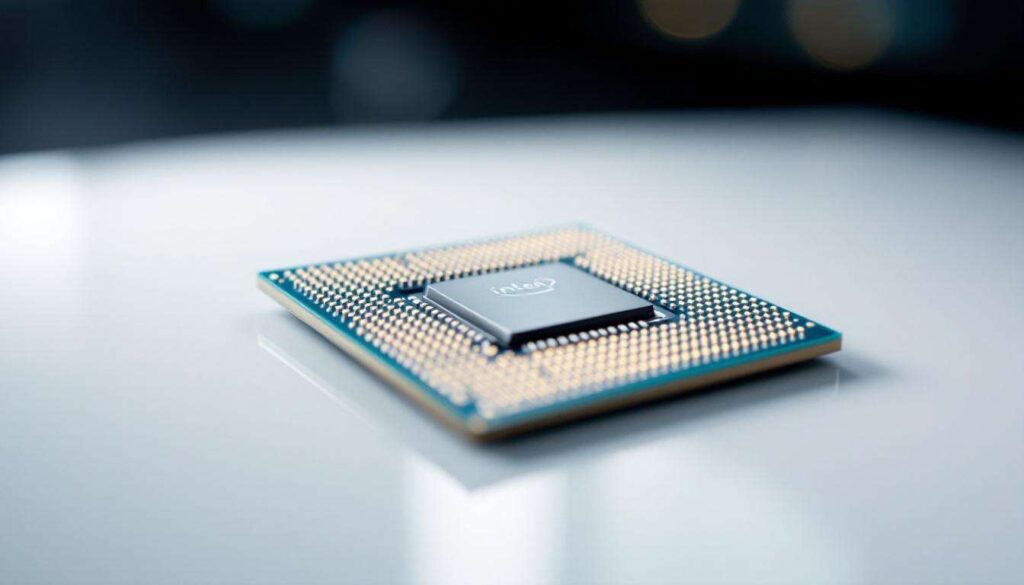
Modern processors represent some of the most intricate engineering achievements in human history, with billions of transistors packed into spaces smaller than a fingernail. Yet this remarkable density brings significant challenges. When manufacturing defects occur within these microscopic circuits, the consequences can range from minor performance hiccups to catastrophic system failures. Intel, one of the world’s leading semiconductor manufacturers, has recently shared compelling insights into its defect detection processes, revealing the extraordinary scale of effort required to ensure each chip meets stringent quality standards before reaching consumers.
The complexity of CPU defects
Understanding the microscopic battlefield
CPU defects manifest in numerous forms, each presenting unique diagnostic challenges. At the nanometre scale where modern processors operate, even the smallest imperfection can compromise functionality. Manufacturing anomalies occur during the intricate fabrication process, where layers of silicon are etched, doped and interconnected through hundreds of individual steps. A single particle of dust, a slight temperature variation or a chemical impurity can introduce flaws that render portions of the chip unusable.
The types of defects encountered include:
- Physical imperfections in the silicon substrate itself
- Errors in the photolithography process that create incorrect circuit patterns
- Contamination from foreign particles during fabrication
- Electrical shorts or opens in interconnect layers
- Timing violations where signals fail to propagate correctly
The statistical reality of semiconductor manufacturing
Yield rates represent the percentage of functional chips produced from each silicon wafer, and these figures tell a sobering story about manufacturing complexity. Intel’s advanced process nodes typically start with lower yields that improve over time as manufacturing techniques are refined. A single 300mm wafer might contain hundreds of individual processor dies, but not all will function perfectly.
| Process node | Typical initial yield | Mature yield |
|---|---|---|
| 14nm | 60-70% | 85-90% |
| 10nm | 50-60% | 80-85% |
| 7nm and below | 40-50% | 75-80% |
These statistics underscore why defect detection becomes increasingly critical as transistor densities rise and feature sizes shrink.
Understanding these complexities naturally leads to examining the sophisticated tools Intel employs to combat them.
The crucial role of technology
Advanced inspection equipment
Intel’s defect detection arsenal includes some of the most sophisticated metrology equipment available. Scanning electron microscopes provide nanometre-resolution imaging that reveals structural defects invisible to optical inspection. These instruments fire focused electron beams across chip surfaces, detecting secondary electrons to construct detailed topographical maps. Meanwhile, optical inspection systems use specialised wavelengths and algorithms to identify pattern deviations across entire wafers in minutes.
The computational backbone
Behind the hardware lies equally impressive software infrastructure. Machine learning algorithms analyse millions of data points from each wafer, identifying subtle patterns that indicate potential defects. These systems continuously learn from historical data, improving their predictive capabilities with each production run. Intel’s engineers have developed proprietary neural networks specifically trained to recognise the signatures of different defect types, dramatically reducing false positives whilst catching genuine issues that might otherwise slip through.
Key technological components include:
- Automated optical inspection systems with sub-micron resolution
- Electrical testing equipment capable of billions of measurements per second
- Data analytics platforms processing terabytes of manufacturing data daily
- Simulation software predicting potential failure modes before they occur
These technological foundations enable the specific methodologies Intel has refined over decades of semiconductor manufacturing.
The detection methods used by Intel
Multi-stage screening approach
Intel implements defect detection at multiple points throughout the manufacturing pipeline. In-line monitoring occurs during fabrication itself, with sensors and inspection tools examining wafers between processing steps. This approach allows engineers to identify problems early, potentially saving entire batches from contamination or process drift. Post-fabrication testing then subjects completed chips to exhaustive functional verification.
Electrical testing protocols
Once fabrication completes, each die undergoes comprehensive electrical testing. Automated test equipment applies millions of test patterns, verifying that every circuit responds correctly. Parametric testing measures characteristics such as voltage thresholds, current leakage and signal propagation delays, ensuring they fall within acceptable ranges. Dies failing any test are marked and excluded from further processing.
Burn-in and stress testing
Selected processors undergo accelerated stress testing where they operate at elevated temperatures and voltages for extended periods. This process reveals latent defects that might not appear during standard testing but could cause premature failures in the field. Intel’s burn-in facilities can simultaneously test thousands of processors, identifying marginal units before they reach customers.
These diverse methods combine into a structured identification workflow that ensures comprehensive coverage.
Key steps in the identification process
Initial wafer inspection
The detection journey begins immediately after wafer fabrication concludes. Automated systems scan entire wafers, creating detailed defect maps that highlight suspicious areas. Engineers review these maps alongside process data, determining whether defects result from random events or systematic manufacturing issues requiring corrective action.
Die-level functional testing
Individual dies then proceed to probe testing, where microscopic needles make temporary electrical contact with test pads. Test programmes execute billions of instructions, exercising every functional block within the processor. The testing sequence includes:
- Logic verification ensuring correct computational results
- Memory testing validating cache integrity
- Interface checking confirming proper communication protocols
- Thermal monitoring detecting abnormal heat generation
Binning and categorisation
Binning represents the final classification step where processors are sorted according to their capabilities. Dies with minor defects in non-critical areas might be sold as lower-specification models, whilst those meeting all criteria become premium products. This practice maximises yield by finding appropriate markets for partially functional chips rather than discarding them entirely.
The rigorous identification processes directly influence how processors perform in real-world applications.
The impact on performance and reliability
Performance implications
Undetected defects can manifest as subtle performance degradation or catastrophic failures. Timing defects might cause processors to require lower clock speeds for stable operation, reducing performance. Interconnect flaws can increase resistance, leading to higher power consumption and heat generation. Intel’s detection efforts ensure that only chips meeting strict performance criteria reach the market, maintaining brand reputation and customer satisfaction.
Long-term reliability considerations
Beyond immediate functionality, defect detection significantly impacts product longevity. Infant mortality describes failures occurring shortly after deployment, often resulting from manufacturing defects that escaped detection. Intel’s comprehensive screening dramatically reduces these early failures, with field failure rates typically measuring in parts per million. This reliability proves especially critical in data centres and mission-critical applications where downtime carries substantial costs.
| Detection thoroughness | Field failure rate | Customer impact |
|---|---|---|
| Basic testing only | 100-500 PPM | Frequent returns |
| Standard protocols | 10-50 PPM | Acceptable reliability |
| Intel’s comprehensive approach | 1-5 PPM | Exceptional reliability |
As impressive as current detection capabilities are, Intel continues developing even more sophisticated approaches.
Innovations on the horizon to enhance detection
Artificial intelligence integration
Intel is expanding its use of artificial intelligence throughout the defect detection pipeline. Next-generation systems will employ deep learning models capable of predicting defects before they occur, analysing subtle correlations in process data that human engineers might miss. These predictive capabilities could enable proactive adjustments to manufacturing parameters, preventing defects rather than merely detecting them.
Advanced imaging technologies
Extreme ultraviolet microscopy and other emerging imaging techniques promise unprecedented visibility into chip structures. These tools will enable inspection of features currently too small for existing equipment, ensuring detection capabilities keep pace with shrinking transistor dimensions. Intel is also exploring quantum sensing technologies that could reveal electrical properties at atomic scales.
Integrated monitoring systems
Future processors may incorporate built-in monitoring circuits that continuously assess their own health. These self-diagnostic capabilities would detect degradation over time, potentially alerting users before failures occur. Such systems could also provide valuable feedback to manufacturers about real-world operating conditions and failure modes.
Emerging innovations include:
- Real-time defect prediction using advanced analytics
- Automated root cause analysis reducing investigation time
- Enhanced simulation tools modelling defect behaviour
- Collaborative platforms sharing insights across manufacturing sites
The semiconductor industry’s relentless pursuit of smaller, faster and more efficient processors demands equally relentless improvements in defect detection. Intel’s revelations about its detection processes highlight the extraordinary investment required to maintain quality standards as manufacturing complexity increases. From sophisticated imaging equipment to artificial intelligence algorithms, the company deploys cutting-edge technology at every stage. Multi-layered testing protocols ensure that only chips meeting stringent criteria reach customers, whilst ongoing innovations promise even greater detection capabilities. This massive effort underpins the reliability consumers expect from modern computing devices, demonstrating that quality assurance remains as critical as the manufacturing processes themselves.