



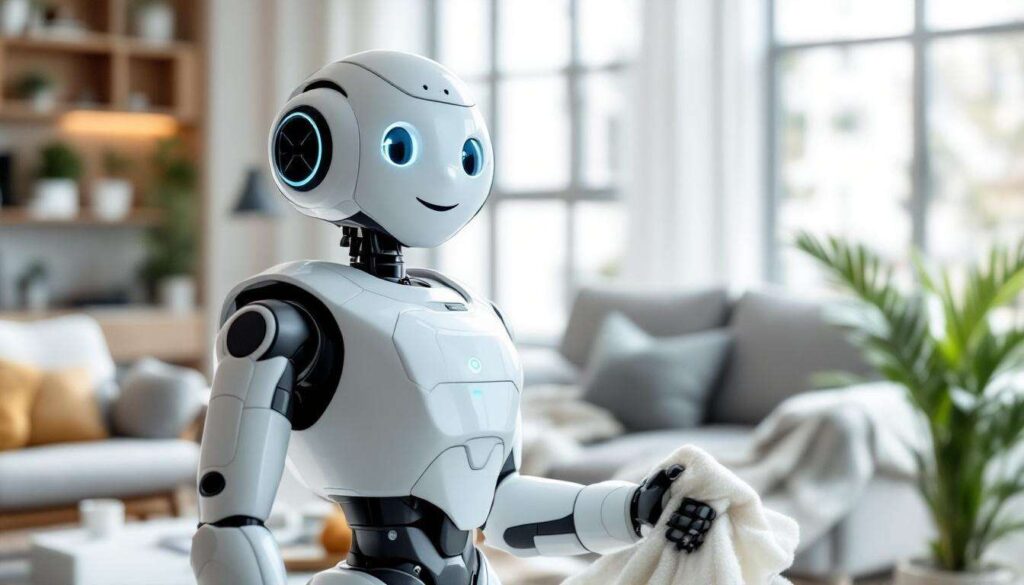
Robotics companies have spent decades promising us machines that would revolutionise our homes, yet the latest wave of companion robots seems to have taken an unexpected turn. Rather than focusing on scrubbing floors or folding laundry, manufacturers are now designing robots that prioritise emotional connection over practical utility. These friendly-faced machines offer conversation, companionship, and perhaps a reassuring presence, but they remain stubbornly unhelpful when it comes to the mundane tasks that consume our daily lives. The question arises: what exactly are we paying for when we bring one of these sociable robots into our homes ?
Introduction to the companion robot: who is it ?
The design philosophy behind companion robots
Companion robots represent a fundamental shift in how engineers and designers approach domestic robotics. Unlike their utilitarian predecessors, these machines are crafted with social interaction as their primary function. They typically feature expressive faces, responsive eyes, and voices designed to sound warm and approachable. The aesthetic choices reflect years of research into human psychology and what makes us feel comfortable around artificial beings.
Several models have emerged in recent years, each with distinct personalities and capabilities:
- Robots with large, animated eyes that track movement and make eye contact
- Machines equipped with touch sensors that respond to physical interaction
- AI-powered companions that learn user preferences and adapt their behaviour accordingly
- Devices with mobility features allowing them to follow owners around the home
Target audience and market positioning
The manufacturers of these companion robots have identified specific demographics most likely to benefit from their products. Elderly individuals living alone represent a significant market segment, as do people experiencing social isolation or mental health challenges. Families with children also feature prominently in marketing campaigns, with robots positioned as educational tools and playmates. The pricing typically ranges from several hundred to several thousand pounds, placing these devices firmly in the premium technology category.
| User Group | Primary Benefit | Price Range |
|---|---|---|
| Elderly users | Companionship and reminders | £800-£2,500 |
| Families | Entertainment and education | £500-£1,800 |
| Isolated individuals | Social interaction | £600-£2,000 |
Understanding who these robots are designed for helps explain why their capabilities focus on conversation rather than chores.
The illusion of robotic friendship
Emotional attachment to machines
Humans possess a remarkable capacity to form emotional bonds with inanimate objects, particularly when those objects exhibit behaviours we associate with living beings. Companion robots exploit this tendency through carefully programmed responses that mimic empathy, interest, and affection. When a robot remembers your name, asks about your day, or responds to your touch with apparent pleasure, it triggers the same neurological pathways activated by genuine social interaction.
Research has demonstrated that people quickly begin treating these machines as social actors rather than mere devices. They apologise when bumping into them, feel guilty about switching them off, and even confide personal information as they would to a trusted friend. This phenomenon raises important questions about the nature of companionship and whether artificial relationships can provide meaningful emotional support.
The limitations of programmed empathy
Despite sophisticated programming, companion robots operate within fundamental constraints that distinguish them from genuine friends. Their responses, however varied, emerge from algorithms rather than authentic understanding. They cannot truly comprehend human suffering, share in our joys, or offer the unpredictable spontaneity that characterises real relationships. The robot may say comforting words when you express sadness, but it experiences no concern for your wellbeing.
- Responses are generated from pre-programmed databases rather than genuine emotion
- The robot cannot form independent opinions or challenge your thinking meaningfully
- Interactions follow patterns designed by programmers rather than emerging organically
- The relationship remains fundamentally one-sided, with no reciprocal needs or growth
These limitations don’t necessarily diminish the value these robots might provide, but they do clarify what users are actually receiving.
Why the robot doesn’t do housework
Technical challenges of domestic tasks
The engineering required to create a robot capable of meaningful household work far exceeds what’s needed for social interaction. Physical manipulation of objects in unpredictable environments remains one of robotics’ greatest challenges. Human homes contain countless variables: different floor surfaces, furniture arrangements, delicate objects, and constantly changing conditions. A robot that can reliably vacuum might struggle with stairs, whilst one that can load a dishwasher must navigate breakable items and varying dish sizes.
Speech recognition and response generation, by contrast, have become relatively straightforward problems in artificial intelligence. Companion robots leverage existing technology from virtual assistants, requiring far less innovation than would be necessary for a multipurpose domestic worker.
Economic considerations
Creating a robot that performs housework effectively would require substantial investment in mechanical systems, sensors, and processing power. The resulting device would likely cost tens of thousands of pounds, placing it beyond the reach of most consumers. Manufacturers have instead chosen to develop products that can be produced affordably whilst still offering perceived value through emotional engagement.
| Robot Type | Development Cost | Retail Price | Market Size |
|---|---|---|---|
| Companion robot | Moderate | £500-£2,500 | Growing |
| Multipurpose domestic robot | Very high | £15,000+ | Minimal |
| Specialised cleaning robot | Low to moderate | £200-£800 | Established |
This strategic focus on companionship rather than utility reflects market realities as much as technological constraints.
The benefits of this friendly robot
Addressing social isolation
Loneliness has emerged as a significant public health concern, particularly amongst elderly populations and individuals living alone. Companion robots offer consistent presence without the complexities of human relationships. They’re available whenever needed, never judge or criticise, and provide interaction without requiring reciprocal emotional labour. For someone who might otherwise spend days without meaningful conversation, a robot companion can offer genuine relief from isolation.
Studies have shown measurable improvements in mood and wellbeing amongst users of companion robots, particularly those with limited social networks. The robots provide structure to daily routines through scheduled interactions and reminders, whilst offering a sense of being cared for that many users find comforting.
Cognitive and emotional support
Beyond simple companionship, these robots can serve therapeutic functions for specific populations. Individuals with dementia or cognitive decline may find comfort in consistent, patient interaction that doesn’t become frustrated or overwhelmed. Children with autism spectrum disorders sometimes respond positively to the predictable, non-judgmental nature of robotic interaction.
- Medication reminders and health monitoring features support independent living
- Structured conversation helps maintain cognitive engagement
- Emotional regulation support through calming responses and distraction techniques
- Reduced caregiver burden by providing supplementary support between human visits
These practical applications demonstrate that utility needn’t always mean physical labour.
Current technological limitations
Artificial intelligence constraints
Despite impressive advances, the AI powering companion robots remains fundamentally limited in its understanding of context and nuance. These systems excel at pattern recognition and generating appropriate responses from learned data, but they lack genuine comprehension of meaning. A robot might recognise that you sound sad and offer comforting words, yet it cannot understand why you’re upset or whether its response is truly helpful in your specific situation.
Natural language processing continues to struggle with sarcasm, cultural references, and the subtle implications that humans navigate effortlessly in conversation. Users must often simplify their speech or repeat themselves, breaking the illusion of natural interaction.
Hardware and battery limitations
The physical capabilities of companion robots remain severely restricted by current battery technology and motor systems. Most models can operate for only a few hours before requiring recharge, limiting their availability. Their mobility, when present, tends to be slow and awkward, with difficulty navigating obstacles or uneven surfaces.
| Limitation | Current State | Impact on Functionality |
|---|---|---|
| Battery life | 2-6 hours active use | Frequent charging breaks |
| Processing power | Cloud-dependent for complex tasks | Requires internet connectivity |
| Mobility | Flat surfaces only | Cannot follow users throughout home |
These practical constraints shape how users can actually integrate these devices into daily life.
The future of domestic robots: what to expect ?
Emerging technologies on the horizon
The next generation of companion robots will likely incorporate advanced sensor arrays and improved machine learning capabilities. Developments in computer vision may enable better recognition of human emotional states through facial expressions and body language. More sophisticated natural language models could produce conversations that feel increasingly natural and contextually appropriate.
Integration with smart home systems represents another promising direction, allowing companion robots to serve as central control hubs whilst maintaining their social functions. They might coordinate with cleaning robots, adjust lighting and temperature, or monitor home security whilst simultaneously providing companionship.
The persistent housework problem
Despite optimistic predictions, robots capable of general household tasks remain distant prospects. The combination of dexterity, decision-making, and adaptability required exceeds current technological capabilities by a considerable margin. We’re more likely to see continued proliferation of specialised robots, each handling specific tasks like vacuuming, lawn mowing, or window cleaning, rather than a single multipurpose domestic assistant.
- Incremental improvements in specific task robots rather than general-purpose machines
- Greater integration between companion robots and task-specific devices
- Enhanced AI capabilities for conversation and emotional support
- Improved physical designs that feel more approachable and less mechanical
The companion robot represents a pragmatic approach to what’s currently achievable, offering genuine value within realistic technological constraints. Whilst it won’t tackle your laundry or scrub your bathroom, it addresses a different kind of need, one that many users find equally important. As technology advances, we may eventually see these social capabilities combined with practical utility, but for now, the division between friend and helper remains firmly in place. The robots that look like friends are exactly that, nothing more and nothing less, and perhaps that’s precisely what some people need.