



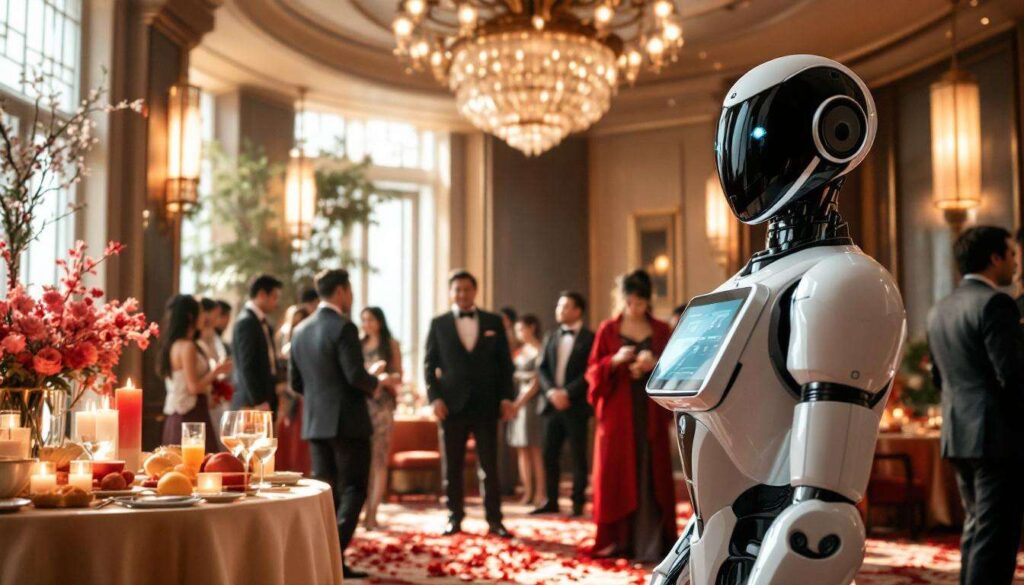
AgiBot, a Chinese robotics company, has recently unveiled an innovative rental service targeting the wedding and events industry. The enterprise offers humanoid robots designed to assist hosts and organisers during celebrations, conferences, and private gatherings. This initiative reflects the growing integration of advanced technology within traditional sectors, as businesses seek novel solutions to enhance customer experiences. With the rapid development of artificial intelligence and robotics in China, AgiBot positions itself as a pioneer in providing accessible humanoid assistance for short-term occasions. The service aims to address labour shortages whilst delivering a futuristic touch to ceremonies and corporate functions.
Launch of AgiBot: a new service in China
AgiBot emerged from the Chinese robotics sector with a clear ambition: to democratise access to humanoid robots through a flexible rental model. Unlike traditional robotic solutions that require substantial capital investment, this service allows event planners, wedding organisers, and businesses to hire robots for specific occasions. The company has developed a fleet of versatile machines capable of performing various tasks, from welcoming guests to serving refreshments and providing information.
The rental model operates through an online platform where clients can browse available robots, select features tailored to their event requirements, and arrange delivery. Pricing structures vary according to the duration of hire, the number of units requested, and the complexity of tasks assigned. AgiBot offers packages ranging from basic greeting functions to more sophisticated services involving choreographed performances or multilingual interactions.
- Online booking system with real-time availability
- Customisable robot functions based on event type
- Technical support and on-site assistance included
- Flexible rental periods from single-day events to week-long conferences
The company has strategically positioned itself in major Chinese cities, including Shanghai, Beijing, and Shenzhen, where demand for innovative event solutions remains high. Initial marketing efforts have focused on wedding planners and corporate event agencies, sectors known for embracing technological novelties. This targeted approach has enabled AgiBot to establish partnerships with key industry players, facilitating rapid market penetration.
Understanding the practical applications of these robots within specific event contexts reveals how technology is reshaping traditional celebrations.
Integration of robots during weddings and events
Roles performed by humanoid robots
At weddings, AgiBot’s humanoid robots undertake a variety of functions that traditionally require human staff. They greet guests upon arrival, guide attendees to their designated seats, and provide information about the ceremony schedule. Some models are equipped with touchscreen interfaces displaying seating charts, menus, and photo galleries. During receptions, robots can serve drinks, distribute favours, and even participate in entertainment segments through synchronised dancing or light displays.
Corporate events benefit similarly from robotic assistance. Conferences utilise these machines for registration processes, directional guidance within large venues, and distribution of promotional materials. Trade shows deploy robots as interactive brand ambassadors, engaging visitors with product demonstrations and collecting contact information for follow-up marketing efforts.
Customisation options for diverse occasions
AgiBot offers extensive customisation to align robots with specific event themes and branding requirements. Clients can request personalised voice greetings, outfit modifications to match colour schemes, and programmed movements that reflect cultural traditions. For weddings, robots may be dressed in formal attire or decorated with floral arrangements. Corporate clients often brand robots with company logos and configure them to deliver scripted presentations about products or services.
| Event Type | Primary Functions | Customisation Features |
|---|---|---|
| Weddings | Guest greeting, serving, entertainment | Themed costumes, personalised messages |
| Corporate conferences | Registration, guidance, information | Company branding, product demos |
| Private parties | Hosting, beverage service, photography | Interactive games, music synchronisation |
These practical implementations demonstrate tangible benefits that extend beyond novelty appeal.
The advantages of humanoid robots in event management
Operational efficiency and cost considerations
Humanoid robots offer consistent performance throughout extended events without fatigue or breaks. They execute repetitive tasks with precision, reducing the likelihood of errors in guest management or service delivery. For large-scale events requiring substantial staffing, robots can supplement human teams, allowing organisers to allocate personnel to more complex responsibilities requiring emotional intelligence and creative problem-solving.
From a financial perspective, rental costs may prove competitive compared to hiring additional temporary staff, particularly for multi-day events. Robots eliminate concerns about overtime payments, meal provisions, and accommodation for out-of-town workers. Additionally, their novelty factor often generates social media engagement, providing indirect marketing value for hosts and venues.
Enhanced guest experience
The presence of humanoid robots creates memorable experiences that distinguish events from conventional gatherings. Guests frequently interact with the technology through photographs and videos, amplifying the event’s visibility across digital platforms. For younger attendees particularly, robotic assistance represents an exciting fusion of entertainment and functionality.
- Multilingual capabilities accommodate international guests
- Consistent service quality throughout event duration
- Reduced wait times for information and assistance
- Unique photo opportunities enhancing guest satisfaction
The technological foundation enabling these capabilities merits closer examination.
AgiBot technology: a revolution for professionals
Technical specifications and capabilities
AgiBot’s humanoid robots incorporate advanced artificial intelligence systems enabling natural language processing, facial recognition, and autonomous navigation. Sensors distributed throughout their frames allow obstacle detection and safe movement through crowded environments. Battery life typically extends six to eight hours, sufficient for most event durations, with quick-charging capabilities available for longer engagements.
The robots’ physical design prioritises approachability, featuring smooth contours and expressive LED displays simulating facial expressions. Height adjustments accommodate different venue requirements, whilst modular components facilitate repairs and upgrades. Connectivity features enable real-time monitoring by event organisers, who can adjust robot behaviour remotely through dedicated applications.
Training and support infrastructure
AgiBot provides comprehensive training for event staff responsible for supervising robots during functions. This includes instruction on basic troubleshooting, programming simple task sequences, and understanding safety protocols. Technical support remains available throughout rental periods via telephone and online channels, with on-site technicians dispatched for complex issues.
The company continuously updates its software, incorporating feedback from rental experiences to enhance functionality. Regular maintenance schedules ensure robots remain in optimal condition, with thorough inspections conducted between bookings.
Real-world experiences from early adopters offer valuable insights into practical performance.
Feedback from users in China
Testimonials from wedding planners
Wedding coordinators in Shanghai report positive responses from clients who appreciate the distinctive element robots bring to ceremonies. One planner noted that humanoid assistants effectively managed guest flow during a reception for three hundred attendees, reducing congestion at entrance points. Another highlighted how robots entertained children during lengthy formal proceedings, allowing parents to focus on the ceremony.
Some feedback indicates initial scepticism from traditional families concerned about technology overshadowing cultural customs. However, careful integration—positioning robots as supplementary rather than replacement staff—has generally alleviated these concerns. Planners emphasise the importance of balancing innovation with respect for ceremonial traditions.
Corporate event organisers’ perspectives
Conference managers praise the robots’ reliability in handling registration processes, noting significant reductions in queuing times. One technology summit utilised six AgiBot units to manage check-in for two thousand delegates, completing the process thirty per cent faster than previous events relying solely on human staff. The robots’ data collection capabilities also streamlined post-event analysis, automatically compiling attendance statistics and visitor engagement metrics.
Challenges mentioned include occasional difficulties with complex queries requiring nuanced understanding beyond programmed responses. Organisers recommend maintaining human supervisors nearby to address situations exceeding robotic capabilities.
These experiences inform projections about the technology’s trajectory.
The future of humanoid robots in the event industry
The event industry stands at the threshold of significant transformation as humanoid robotics mature and become more accessible. AgiBot’s rental model may inspire similar services globally, particularly in regions with high labour costs or skills shortages. Technological advancements promise enhanced capabilities, including improved emotional recognition allowing robots to respond appropriately to guest moods and more sophisticated conversational abilities approaching human-level interaction.
Potential applications extend beyond current functions. Future iterations might incorporate augmented reality features, projecting holographic displays for entertainment or information delivery. Integration with venue management systems could enable robots to adjust environmental conditions—lighting, temperature, music—based on real-time crowd analysis. Sustainability considerations may drive development of energy-efficient models with extended battery life and recyclable components.
Regulatory frameworks will likely evolve to address safety standards, liability questions, and employment implications. Industry associations may establish certification programmes ensuring robotic assistants meet quality benchmarks. As acceptance grows, robots could become standard fixtures at events, their presence as unremarkable as audiovisual equipment or catering services.
AgiBot’s pioneering rental service represents a significant milestone in merging robotics with traditional event management. By offering accessible humanoid assistance, the company addresses practical operational challenges whilst delivering memorable experiences for guests. Early adoption in China’s wedding and corporate sectors demonstrates both the technology’s viability and areas requiring refinement. As capabilities expand and costs decrease, humanoid robots may transition from novelty attractions to essential event infrastructure, fundamentally reshaping how celebrations and gatherings are orchestrated across diverse cultural contexts.