



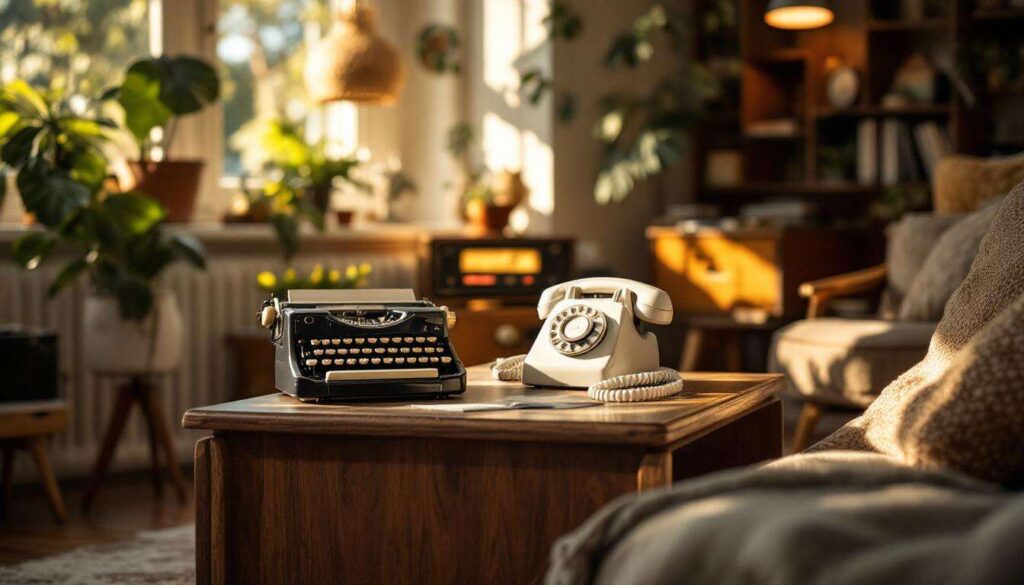
The resurgence of analogue technology has created an unexpected trend amongst homeowners seeking to infuse their living spaces with character and warmth. These seemingly outdated devices offer more than mere functionality; they represent a deliberate rejection of the disposable nature of modern electronics. From the rich tones of vinyl records to the hypnotic glow of lava lamps, these retro gadgets have transcended their original purpose to become statement pieces that bridge generations. Their appeal lies not in nostalgia alone, but in the tactile, sensory experiences they provide—something increasingly rare in our touchscreen-dominated era.
Turntables: vinyl’s comeback
The renaissance of analogue sound
Vinyl records have experienced a remarkable revival, with sales reaching levels not seen since the 1980s. Turntables have become centrepieces in contemporary homes, offering an authentic listening experience that digital formats struggle to replicate. The warm, full-bodied sound produced by vinyl appeals to audiophiles and casual listeners alike, creating a ritualistic approach to music consumption that demands attention and presence.
Technical sophistication meets classic design
Modern turntables combine vintage aesthetics with cutting-edge technology. Many models feature:
- Bluetooth connectivity for wireless speaker pairing
- USB outputs for digital archiving
- Built-in preamps for simplified setup
- Adjustable counterweights for optimal sound quality
- Belt-drive or direct-drive mechanisms
The physical interaction required—carefully placing the needle, flipping sides, handling delicate records—transforms music listening into a mindful activity rather than background noise. This tangible connection to music has proven particularly attractive to younger generations discovering vinyl for the first time.
Beyond audio equipment, another form of instant gratification has captured the imagination of those seeking tangible memories.
Polaroid and Instax: capturing the moment
Instant photography’s enduring appeal
Instant cameras have defied the smartphone revolution by offering something digital photography cannot: a physical photograph that develops before your eyes. The characteristic square format and distinctive colour palette of Polaroid prints have become synonymous with authentic moments, free from filters and endless editing.
The psychology of limited shots
Unlike digital cameras with unlimited storage, instant film’s cost encourages deliberate composition. Each photograph becomes precious, forcing photographers to consider their subject carefully. This scarcity creates meaningful documentation rather than the thousands of forgotten images languishing in cloud storage.
| Camera Type | Film Cost per Shot | Development Time |
|---|---|---|
| Polaroid Now+ | £1.50-£2.00 | 10-15 minutes |
| Instax Mini 12 | £0.50-£0.70 | 90 seconds |
| Instax Wide 300 | £0.80-£1.00 | 90 seconds |
The tactile nature of instant photographs—pinning them to walls, creating albums, gifting them to friends—provides a tangible connection to memories that scrolling through a phone gallery cannot match.
The desire for tangible experiences extends beyond photography into the realm of interactive entertainment.
Retro consoles: the charm of pixels
Gaming’s nostalgic revolution
Classic gaming consoles have experienced a commercial renaissance, with manufacturers releasing miniaturised versions of beloved systems. Retro gaming appeals to those who remember the original releases whilst attracting newcomers curious about gaming’s origins. The simplicity of 8-bit and 16-bit graphics offers a refreshing contrast to today’s hyperrealistic titles.
Why pixel art endures
The limitations of early gaming technology forced developers to prioritise gameplay over graphics, resulting in titles that remain engaging decades later. These games require skill and patience, lacking the hand-holding tutorials and checkpoint systems common in modern releases. The challenge they present has become part of their appeal.
- Nintendo Entertainment System (NES) Classic Edition
- Super Nintendo Entertainment System (SNES) Classic Mini
- Sega Genesis Mini
- PlayStation Classic
- Commodore 64 Mini
Many enthusiasts go beyond official re-releases, restoring original hardware and hunting for cartridges. This collector culture has transformed vintage gaming into both hobby and investment, with rare titles commanding substantial prices.
Whilst gaming consoles offer interactive nostalgia, other devices serve purely aesthetic purposes with surprising effectiveness.
Rotary phones: a vintage aesthetic
Function meets decorative statement
Rotary telephones have found new life as decorative objects that occasionally function as intended. Their substantial weight, metallic construction, and mechanical dialling mechanism represent an era when household items were built to last generations. The satisfying click of the rotary dial and the authentic bell ringer provide sensory feedback absent from modern devices.
Practical applications in modern homes
Despite their antiquated technology, rotary phones can still connect to landlines with appropriate adapters. Some homeowners maintain them as:
- Emergency backup communication devices
- Conversation pieces in home offices
- Functional art in vintage-themed interiors
- Teaching tools for younger generations
The deliberate slowness of rotary dialling forces a mindful approach to communication, each number requiring physical effort and attention. This contrasts sharply with the frictionless speed of modern smartphones, where contacts are summoned with a tap.
The mechanical satisfaction of rotary phones finds a literary counterpart in another analogue device experiencing renewed interest.
Typewriters: nostalgia of the past
The mechanical writing experience
Typewriters have become sought-after items amongst writers, artists, and collectors who appreciate their distinctive aesthetic and tactile feedback. The physical act of striking keys, hearing the clack of typebars, and manually advancing paper creates an immersive writing experience that keyboards cannot replicate. Each keystroke requires commitment—there is no backspace, no autocorrect, no endless revision.
Creative constraints breed innovation
The limitations of typewriters force writers to think before typing, planning sentences mentally before committing them to paper. This deliberate process can improve writing quality by encouraging precision and reducing the endless tinkering that digital documents allow. Many contemporary authors maintain typewriters specifically for first drafts, finding the format conducive to creativity.
| Typewriter Model | Era | Typical Price Range |
|---|---|---|
| Royal Quiet De Luxe | 1940s-1950s | £150-£400 |
| Olivetti Lettera 32 | 1960s | £100-£300 |
| IBM Selectric | 1970s-1980s | £200-£500 |
Beyond functionality, typewriters serve as sculptural objects that command attention in any room. Their mechanical complexity and craftsmanship represent an engineering philosophy that prioritised repairability and longevity over planned obsolescence.
From the mechanical precision of typewriters, we move to a device that prioritises visual spectacle over practical purpose.
Lava lamps: a psychedelic ambience
The science of mesmerising motion
Lava lamps remain popular precisely because they serve no practical purpose beyond aesthetic pleasure. The hypnotic movement of coloured wax rising and falling within liquid creates a meditative focal point that encourages relaxation. The physics behind their operation—heat causing density changes that create perpetual motion—fascinates observers of all ages.
Design versatility in contemporary spaces
Modern lava lamps extend far beyond the psychedelic associations of their 1960s origins. Manufacturers now offer:
- Minimalist designs with neutral colour schemes
- Oversized floor models as statement pieces
- Compact versions for desks and shelves
- LED-enhanced models with colour-changing capabilities
- Glitter lamps with metallic particles instead of wax
The gentle illumination provided by lava lamps creates ambient lighting that softens harsh overhead fixtures. Their warm glow contributes to cosy atmospheres in bedrooms, living rooms, and creative spaces. Unlike screens that demand attention, lava lamps exist in peripheral vision, providing visual interest without distraction.
The enduring popularity of these devices demonstrates that technological progress need not render older innovations obsolete. Each gadget offers something contemporary technology has sacrificed in pursuit of efficiency: the pleasure of slowing down and engaging with objects that reward patience and attention.
These six gadgets represent more than mere nostalgia; they embody a growing awareness that convenience and speed do not automatically improve quality of life. The tactile satisfaction of vinyl, the anticipation of developing photographs, the challenge of vintage games, the mechanical precision of rotary phones and typewriters, and the meditative quality of lava lamps all provide experiences that modern technology has streamlined away. Their presence in contemporary homes signals a desire for balance—embracing progress whilst preserving the sensory richness of analogue experiences. As digital fatigue increases, these retro devices offer tangible alternatives that engage multiple senses and demand mindful interaction, proving that sometimes the old ways still have something valuable to teach us.