


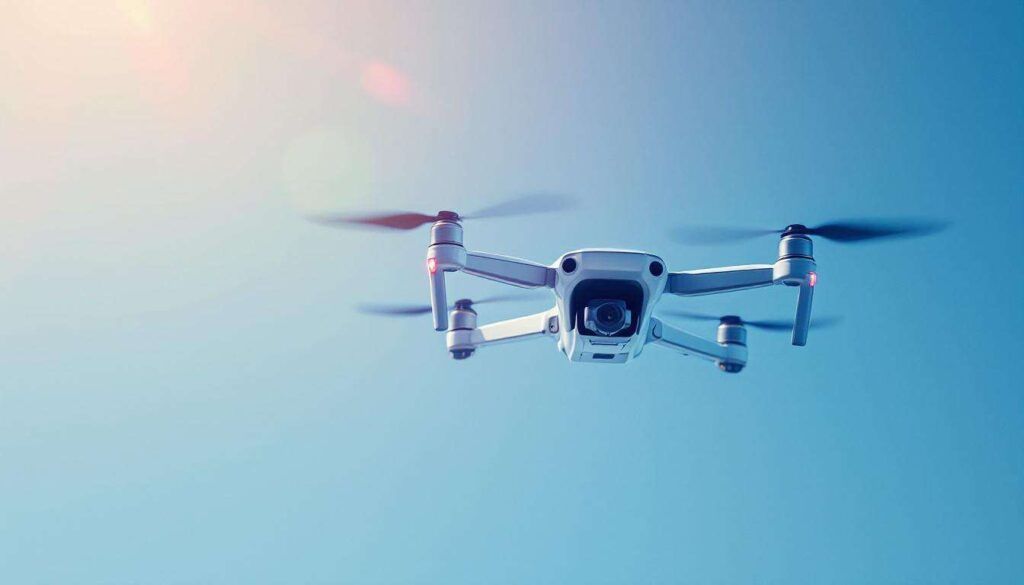
The aviation technology sector witnesses another breakthrough as a leading manufacturer unveils a drone capable of responding to simple hand movements. This innovation marks a significant shift in how users interact with aerial devices, eliminating the need for traditional controllers in many scenarios. The device combines compact design with sophisticated sensors, allowing even inexperienced operators to capture aerial footage with unprecedented ease.
DJI revolutionises drone flying
A paradigm shift in aerial technology
The manufacturer has fundamentally transformed the user experience by introducing a drone that responds to natural human gestures. This advancement removes the traditional barriers associated with remote-controlled flight, making aerial photography accessible to a broader audience. The device weighs less than traditional models whilst incorporating advanced stabilisation systems and intelligent flight algorithms.
Bridging the gap between professionals and enthusiasts
The new model addresses a crucial market segment: users who desire professional-quality footage without the steep learning curve. Key aspects include:
- Palm-sized dimensions allowing portability in standard pockets
- Automatic takeoff and landing sequences
- Integrated safety features preventing collisions
- Built-in screen for immediate mode selection
- Compatibility with existing controller ecosystems
This approach democratises aerial cinematography, enabling content creators to focus on creative vision rather than technical operation. The device represents a strategic move to expand market reach beyond traditional enthusiast demographics.
New features of the DJI drone
Omnidirectional obstacle detection
The drone incorporates comprehensive sensor arrays providing 360-degree environmental awareness. This system continuously monitors surroundings, automatically adjusting flight paths to avoid potential hazards. The technology employs:
| Feature | Specification | Benefit |
|---|---|---|
| Sensor coverage | Omnidirectional | Complete spatial awareness |
| Detection range | Multiple metres | Early hazard identification |
| Response time | Milliseconds | Immediate course correction |
| Processing | Real-time algorithms | Autonomous decision-making |
Enhanced return-to-hand functionality
The auto-return mechanism demonstrates remarkable precision in identifying and landing on the operator’s palm. Advanced computer vision algorithms analyse hand position, orientation, and movement patterns to execute safe landings. This feature particularly benefits users filming in dynamic environments where traditional landing zones may be unavailable.
Versatile control options
Operators can choose from multiple control methods depending on their skill level and requirements:
- Gesture-only operation for quick captures
- Smartphone application for enhanced control
- Dedicated remote controllers for precision flight
- First-person view goggles for immersive experiences
- Voice command integration for hands-free operation
This flexibility ensures the device adapts to various filming scenarios, from casual social media content to more structured productions requiring precise camera movements.
How to control the drone with a gesture
Initial activation sequence
Operating the device begins with a remarkably simple process. Users place the drone on their open palm and press a single button located on the device’s surface. The internal sensors immediately recognise the hand position and initiate the takeoff sequence. Within seconds, the drone hovers steadily at eye level, awaiting further instructions.
Recognised gesture commands
The system interprets several intuitive hand movements to control flight and camera functions:
- Palm raise: initiates upward movement
- Palm lower: commands descent
- Hand wave: triggers photo capture
- Circular motion: activates orbit mode
- Extended palm: signals landing request
- Pointing gesture: directs forward movement
Tracking and following capabilities
Once airborne, the drone employs sophisticated tracking algorithms to maintain focus on the operator. The system continuously analyses body position, movement speed, and direction to anticipate trajectory changes. This allows users to engage in activities whilst the drone autonomously captures footage from optimal angles.
Safety protocols during gesture control
Multiple safeguards protect both operator and equipment during gesture-based flight:
| Safety feature | Function |
|---|---|
| Proximity sensors | Prevent contact with operator |
| Gesture validation | Confirm intentional commands |
| Emergency hover | Stabilise during uncertain signals |
| Battery monitoring | Automatic return at low power |
These systems work cohesively to ensure reliable operation even when users lack traditional piloting experience.
The impact of the drone on the industry
Reshaping consumer expectations
This technological advancement establishes new baseline standards for user-friendly drone design. Competitors face pressure to develop similarly intuitive interfaces or risk market share erosion. The shift towards gesture control influences product development strategies across the sector, accelerating innovation in human-machine interaction.
Expanding market demographics
The simplified operation attracts previously untapped customer segments:
- Casual photographers seeking effortless aerial shots
- Social media content creators requiring quick setup
- Travel enthusiasts wanting portable documentation tools
- Families desiring accessible technology for memories
- Educational institutions teaching basic robotics concepts
Implications for professional applications
Whilst designed for accessibility, the technology holds significant potential for professional contexts. Industries exploring applications include:
| Sector | Application | Advantage |
|---|---|---|
| Real estate | Property documentation | Rapid deployment |
| Journalism | Event coverage | Minimal equipment |
| Emergency services | Situation assessment | Quick reconnaissance |
| Agriculture | Crop monitoring | Simplified operation |
The technology’s ease of deployment reduces training requirements and operational complexity in time-sensitive scenarios.
The advantages and disadvantages of automated flight
Benefits of autonomous operation
Automated flight systems deliver substantial advantages for various user categories:
- Reduced learning curve enabling immediate productivity
- Consistent footage quality through stabilised algorithms
- Enhanced safety via collision avoidance systems
- Multitasking capability during outdoor activities
- Stress reduction for inexperienced operators
- Predictable battery management and flight planning
These benefits particularly resonate with users prioritising convenience and reliability over manual control precision.
Limitations and concerns
Despite technological sophistication, automated systems present certain challenges and restrictions:
| Limitation | Impact | Mitigation |
|---|---|---|
| Creative constraints | Reduced shot variety | Manual override options |
| Environmental sensitivity | Performance in complex spaces | Enhanced sensor arrays |
| Battery consumption | Shorter flight duration | Efficient power management |
| Gesture misinterpretation | Unintended commands | Confirmation protocols |
Balancing automation with user control
The manufacturer addresses these concerns by providing graduated control options. Users can transition from fully automated gesture control to manual operation as their confidence grows. This approach preserves accessibility whilst accommodating developing expertise.
Future perspectives for DJI drones
Anticipated technological developments
Industry analysts predict several evolutionary pathways for gesture-controlled drone technology:
- Artificial intelligence integration for predictive filming
- Extended battery life through efficient power systems
- Enhanced weather resistance for diverse conditions
- Improved low-light performance for evening operation
- Expanded gesture vocabulary for complex manoeuvres
- Swarm coordination for multi-drone productions
Market expansion opportunities
The manufacturer’s innovation opens numerous growth avenues across different sectors. Educational institutions may adopt the technology for teaching robotics and programming concepts. Healthcare providers could explore applications in patient monitoring or facility inspection. The tourism industry might integrate gesture-controlled drones into guided experiences.
Regulatory considerations
As automated drones become more prevalent, regulatory frameworks must evolve to address new operational paradigms. Aviation authorities worldwide are examining how gesture-controlled devices fit within existing airspace management systems. The technology’s accessibility raises questions about operator certification requirements and liability structures.
The gesture-controlled drone represents a significant milestone in making aerial technology accessible to mainstream audiences. By eliminating traditional control barriers through intuitive hand movements and automated flight systems, the device democratises aerial photography whilst maintaining professional-grade capabilities. The omnidirectional obstacle detection and precision landing features address safety concerns that previously deterred potential users. As the technology matures and competitors respond with their own innovations, the industry moves towards increasingly sophisticated yet user-friendly solutions. The balance between automation and manual control will continue evolving, shaped by user feedback and technological capabilities. This advancement signals a broader trend towards natural human-machine interfaces that prioritise immediate usability without sacrificing performance or creative potential.