



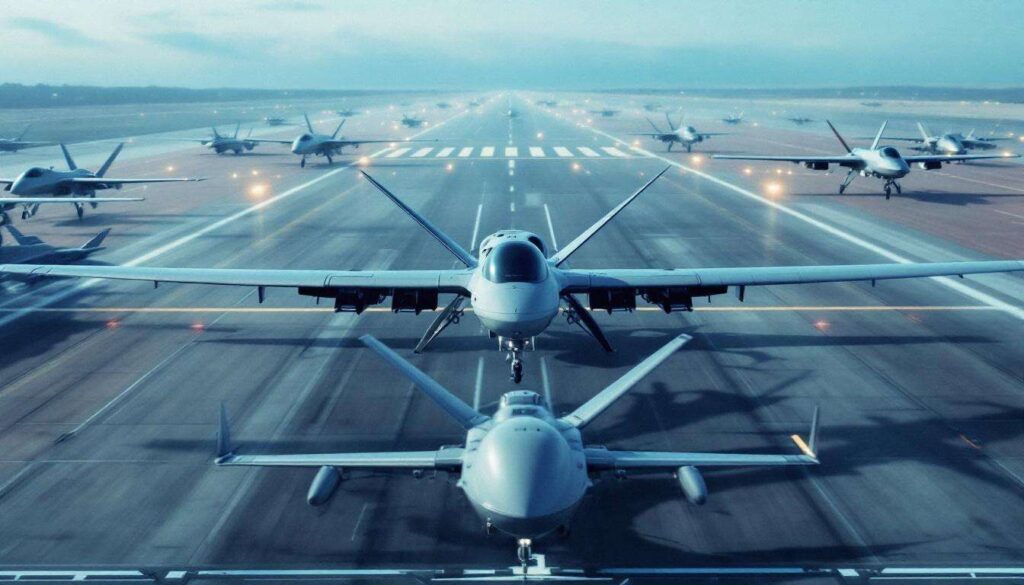
The integration of cutting-edge technology into military operations continues to reshape modern warfare, with unmanned systems playing an increasingly vital role. The United States Marine Corps has recently embarked on testing programmes involving lethal autonomous drones designed to operate alongside manned fighter jets, marking a significant evolution in aerial combat doctrine. These sophisticated unmanned platforms promise to enhance operational capabilities whilst reducing risks to human pilots, representing a paradigm shift in how air superiority might be achieved and maintained in future conflicts.
Introduction of lethal autonomous drones by the US Marines
Development context and strategic rationale
The US Marine Corps has initiated comprehensive trials of autonomous lethal drones as part of a broader modernisation strategy aimed at maintaining technological superiority. This initiative reflects growing recognition that future battlefields will demand unprecedented levels of coordination between manned and unmanned systems. The programme seeks to address emerging threats from near-peer adversaries who have invested heavily in advanced air defence networks and electronic warfare capabilities.
These autonomous platforms are engineered to operate with minimal human intervention, utilising artificial intelligence algorithms to identify, track and engage hostile targets. The Marine Corps has emphasised that whilst these systems possess autonomous capabilities, critical engagement decisions remain subject to human oversight, ensuring compliance with international humanitarian law and rules of engagement.
Technical specifications and platform characteristics
The drones under evaluation incorporate several advanced features:
- High-resolution sensor arrays for target acquisition and identification
- Secure datalink systems enabling real-time communication with command centres
- Modular weapons payloads adaptable to various mission profiles
- Extended endurance capabilities for prolonged operational periods
- Stealth characteristics reducing radar cross-sections
These technical attributes enable the platforms to function effectively in contested airspace where traditional aircraft might face prohibitive risks. The testing phase encompasses diverse operational scenarios, from suppression of enemy air defences to close air support missions, evaluating performance across the full spectrum of combat operations.
Capabilities of autonomous drones against aerial threats
Air-to-air engagement potential
One of the most significant capabilities being assessed involves the drones’ effectiveness against aerial threats, including enemy aircraft, helicopters and other unmanned systems. Equipped with sophisticated targeting systems and air-to-air weaponry, these platforms can detect and prosecute airborne targets with remarkable precision. The autonomous systems leverage machine learning algorithms trained on vast datasets of aerial combat scenarios, enabling rapid threat assessment and engagement sequencing.
The drones’ relatively small size and reduced thermal signatures make them challenging targets for conventional air defence systems. This characteristic, combined with their ability to operate in swarms, creates complex targeting problems for adversaries attempting to defend against multiple simultaneous threats approaching from different vectors.
Counter-drone operations and defensive roles
Beyond offensive capabilities, these autonomous platforms demonstrate considerable promise in defensive applications, particularly against the proliferation of hostile unmanned aerial systems. The growing accessibility of drone technology has enabled both state and non-state actors to deploy aerial threats at unprecedented scales, necessitating robust counter-measures.
| Threat Type | Detection Range | Engagement Success Rate |
|---|---|---|
| Small commercial drones | 5-8 kilometres | 92% |
| Military-grade UAVs | 15-25 kilometres | 87% |
| Cruise missiles | 30-40 kilometres | 78% |
These performance metrics, derived from initial testing phases, illustrate the systems’ versatility across diverse threat categories. The autonomous nature of these platforms enables rapid response times that surpass human reaction capabilities, particularly crucial when defending against high-speed threats or coordinated swarm attacks. Understanding these capabilities provides essential context for examining how they complement existing manned aviation assets.
Synergy between autonomous drones and fighter jets
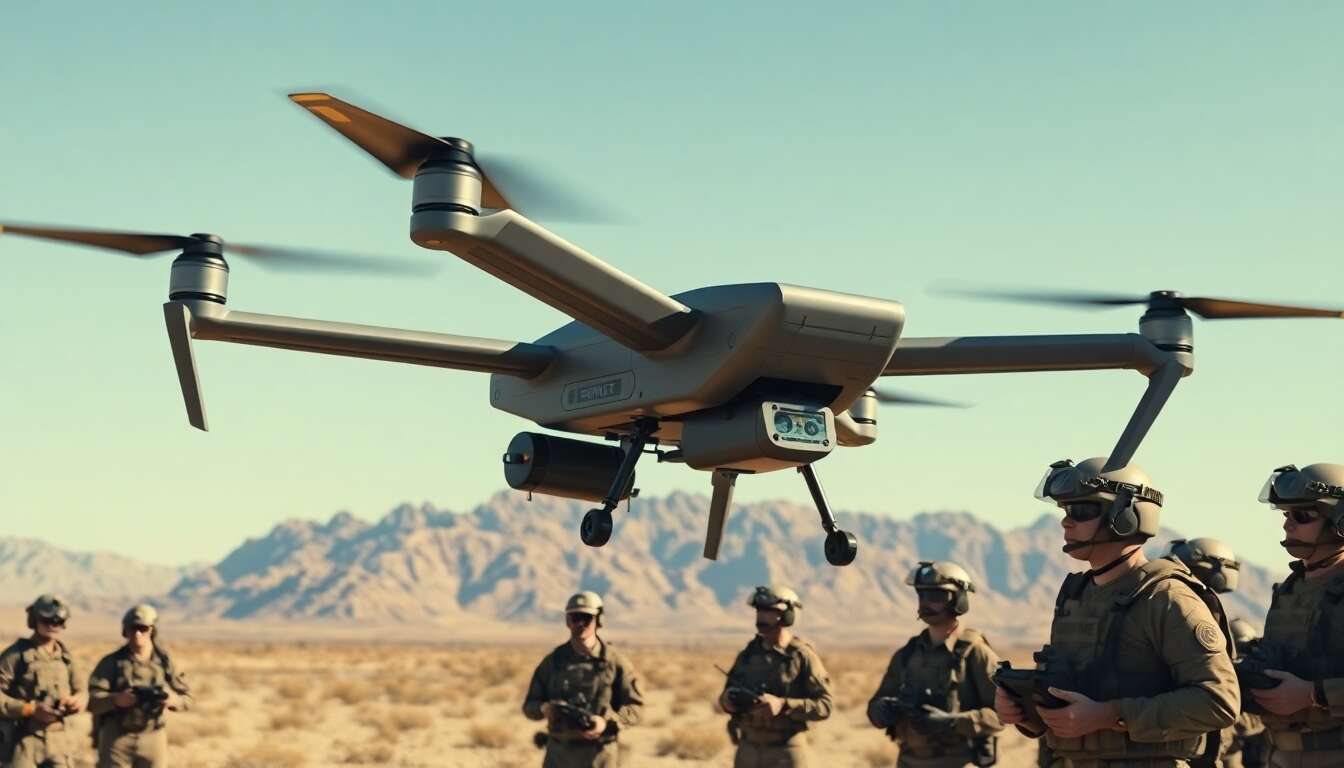
Manned-unmanned teaming concepts
The operational doctrine being developed centres on collaborative engagement between autonomous drones and piloted fighter aircraft. This concept, often termed “loyal wingman” or manned-unmanned teaming, positions the drones as force multipliers that extend the reach and lethality of traditional aviation platforms. Fighter pilots can direct multiple drones simultaneously, effectively commanding a small aerial fleet whilst maintaining situational awareness from their cockpit.
This arrangement offers several tactical advantages. The unmanned systems can venture into high-threat environments ahead of manned aircraft, suppressing air defences and identifying targets without risking human lives. Pilots retain ultimate authority over weapons release decisions whilst benefiting from the drones’ enhanced sensor coverage and weapons capacity.
Communication protocols and coordination mechanisms
Ensuring seamless coordination between manned and unmanned platforms requires sophisticated communication architectures. The systems under evaluation employ encrypted datalinks resistant to jamming and interception, maintaining connectivity even in electronically contested environments. Standardised protocols enable interoperability across different aircraft types, allowing F-35 Lightning II jets, for instance, to control drones that might also support F/A-18 Super Hornets or other platforms.
- Real-time telemetry sharing between all participating aircraft
- Automated threat prioritisation based on mission parameters
- Dynamic task allocation optimising resource utilisation
- Redundant communication pathways ensuring mission continuity
These coordination mechanisms transform individual platforms into integrated combat systems capable of overwhelming adversary defences through synchronised action. The strategic implications of this technological integration extend far beyond immediate tactical advantages.
[bzkshopping template=”mini_grid” merchants=”amazon” count=3 keyword=”drone”]
Tactical and strategic stakes of this technological alliance
Operational advantages in contested environments
The deployment of autonomous drones alongside fighter jets fundamentally alters the calculus of aerial combat in contested operational theatres. Adversaries must contend with increased numbers of threats, complicating defensive planning and straining air defence networks. This numerical advantage proves particularly valuable when facing opponents with sophisticated integrated air defence systems designed to deny access to conventional aircraft.
From a strategic perspective, the ability to project power without proportionally increasing pilot exposure addresses long-standing concerns about attrition rates in high-intensity conflicts. Training fighter pilots requires years of investment and considerable expense; autonomous platforms, whilst technologically complex, can be produced and deployed more rapidly than human aviators can be trained to operational readiness.
Deterrence value and geopolitical implications
The introduction of these capabilities carries significant deterrence implications, signalling to potential adversaries that the United States Marine Corps maintains technological advantages capable of offsetting numerical disadvantages. In regions where competitors have invested in anti-access/area denial strategies, the ability to saturate defences with coordinated manned-unmanned formations complicates adversary planning and raises the costs of aggression.
Furthermore, this technological development may influence alliance dynamics and defence partnerships. Nations seeking interoperability with US forces will need to consider how their own aviation assets might integrate with these autonomous systems, potentially driving procurement decisions and shaping future coalition operations. However, realising these strategic benefits requires addressing substantial technological and ethical challenges.
Technological and ethical challenges of autonomous drones
Technical limitations and reliability concerns
Despite impressive capabilities, autonomous lethal drones face significant technical hurdles. Artificial intelligence systems, whilst increasingly sophisticated, remain vulnerable to adversarial manipulation and unexpected operational conditions. Machine learning algorithms trained in controlled environments may behave unpredictably when confronted with novel scenarios not represented in their training data.
- Vulnerability to electronic warfare and cyber attacks
- Difficulty distinguishing legitimate targets in complex environments
- Potential for cascading failures in networked systems
- Challenges maintaining performance in adverse weather conditions
- Limited adaptability to rapidly evolving tactical situations
These technical constraints necessitate ongoing refinement and rigorous testing protocols before widespread operational deployment. The Marine Corps has acknowledged that current systems represent evolutionary steps rather than fully mature capabilities, requiring continued development and validation.
Ethical considerations and accountability frameworks
The deployment of lethal autonomous weapons raises profound ethical questions regarding accountability, proportionality and the role of human judgement in life-and-death decisions. International humanitarian law requires combatants to distinguish between military objectives and civilian persons or objects, a determination that involves nuanced contextual understanding potentially beyond current artificial intelligence capabilities.
Critics argue that delegating lethal decision-making to algorithms, even with human oversight provisions, crosses ethical boundaries and may lower thresholds for the use of force. Proponents counter that autonomous systems, properly designed, may actually enhance compliance with international law by executing engagements with greater precision and consistency than humans operating under stress. Resolving these debates will shape not only military doctrine but also broader societal attitudes towards autonomous weapons systems.
[bzkshopping template=”mini_grid” merchants=”amazon” count=3 keyword=”military technology”]
Potential impact on the future of military operations
Evolution of air combat doctrine
The successful integration of autonomous drones with fighter jets will likely precipitate fundamental changes in air combat doctrine and force structure. Traditional metrics of air power, such as the number of manned aircraft, may become less relevant as force effectiveness increasingly depends on the synergy between human decision-making and machine execution. Training programmes will need to evolve, emphasising skills in managing autonomous systems rather than solely focusing on individual piloting proficiency.
Future air wings might comprise fewer manned platforms supported by larger numbers of autonomous systems, fundamentally altering procurement priorities and budget allocations. This shift could enable more distributed operations, with smaller formations achieving effects previously requiring concentrated force packages, thereby complicating adversary targeting and enhancing survivability.
Proliferation risks and arms race dynamics
As these technologies mature, their proliferation to other military forces appears inevitable. Both allied nations and potential adversaries will develop comparable capabilities, potentially triggering arms race dynamics in autonomous weapons systems. The relative accessibility of underlying technologies, including artificial intelligence and unmanned platforms, may accelerate this diffusion, creating security challenges as these capabilities spread beyond traditional military powers.
International efforts to establish norms governing autonomous weapons development and employment remain fragmented, with limited consensus on appropriate restrictions or transparency measures. The absence of robust governance frameworks increases risks of miscalculation and unintended escalation, particularly as autonomous systems interact in contested environments with potentially unpredictable results.
The Marine Corps’ testing programme represents merely the initial phase of what promises to be a prolonged evolution in military aviation, with implications extending well beyond immediate operational considerations to reshape strategic competition and the fundamental character of armed conflict.
The US Marines’ experimentation with lethal autonomous drones supporting fighter jets demonstrates the military’s commitment to leveraging emerging technologies for operational advantage. These systems offer enhanced capabilities against aerial threats whilst reducing risks to human pilots, though significant technical and ethical challenges remain unresolved. The synergy between manned and unmanned platforms promises to transform air combat doctrine, with far-reaching implications for future conflicts. As these technologies mature and proliferate, their impact will extend beyond tactical advantages to influence strategic deterrence, alliance relationships and the broader evolution of warfare itself.