



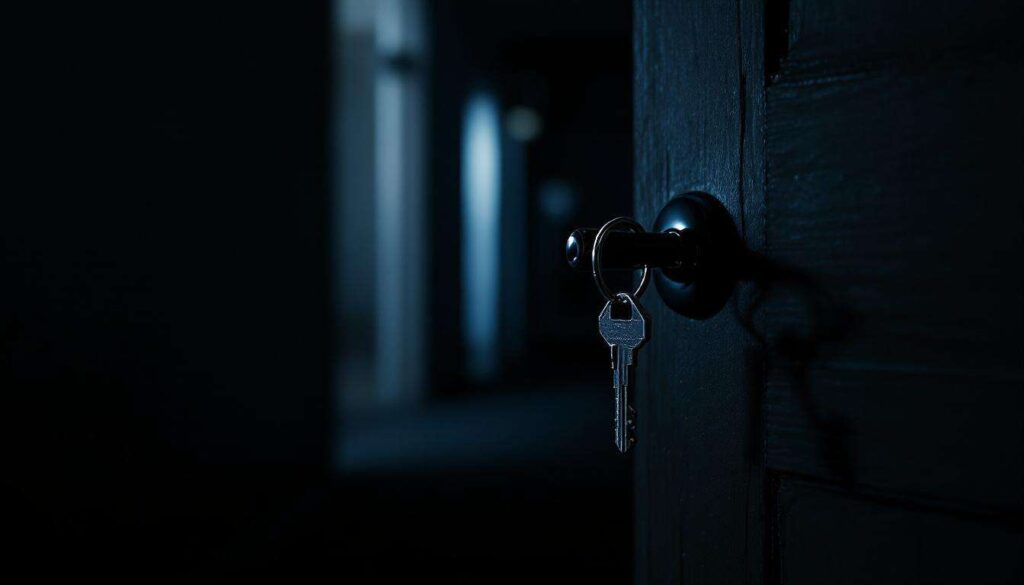
Many homeowners develop seemingly harmless habits without considering their potential security implications. One such practice involves leaving a key in the door lock overnight, whether on the inside or outside of the property. Whilst this might appear convenient or even protective, security experts and insurance professionals warn that this common behaviour creates multiple vulnerabilities. From facilitating unauthorised entry to complicating emergency evacuations, the risks associated with this habit extend far beyond what most people realise. Understanding these dangers is essential for maintaining proper home security and ensuring the safety of everyone within the household.
Why leaving keys in the lock is risky
The practice of leaving keys in door locks overnight creates immediate security vulnerabilities that many homeowners fail to recognise. This seemingly innocent habit transforms a protective mechanism into a potential liability.
The mechanical advantage for intruders
When a key remains in the lock, it provides burglars with a mechanical target that simplifies their task considerably. Professional locksmiths explain that experienced criminals can manipulate the protruding key using specialised tools, effectively turning your own security device against you. The key’s presence in the cylinder prevents the lock from functioning as designed, creating weaknesses that skilled intruders can exploit within minutes.
Common misconceptions about protection
Many people mistakenly believe that leaving a key in the lock from the inside prevents external keys from working, thereby enhancing security. However, this assumption proves fundamentally flawed. The reality presents several problems:
- The key creates a visible indicator that someone is home, potentially marking the property as occupied
- Intruders can use the key’s position to gauge the lock mechanism’s orientation
- The protruding key offers leverage points for manipulation tools
- Modern lock-picking techniques can work around keys left in cylinders
These security concerns become particularly relevant when considering the broader context of residential break-ins and how criminals select their targets.
The heightened burglary risks
Statistical evidence demonstrates that doors represent the primary entry point for residential burglaries, making any practice that compromises door security especially dangerous.
Alarming entry statistics
Research into burglary patterns reveals concerning trends about how criminals access properties:
| Entry Point | Percentage of Break-ins |
|---|---|
| Front and back doors | 73% |
| Ground floor windows | 23% |
| Other entry points | 4% |
Furthermore, 56% of burglaries occur during darkness, precisely when homeowners most commonly leave keys in locks. This temporal overlap creates a dangerous coincidence that criminals actively exploit.
The unlocked door phenomenon
Surveys reveal that approximately 42% of households admit to leaving doors unlocked at night, demonstrating widespread complacency about home security. When combined with keys left in locks, this behaviour essentially provides burglars with unrestricted access. The psychological comfort of being inside one’s home often leads to relaxed security practices, yet statistics prove that nighttime represents a particularly vulnerable period.
Beyond the immediate threat of unauthorised entry, leaving keys in locks creates additional complications during critical situations requiring rapid egress.
The consequences in an emergency
Emergency situations demand swift and unobstructed evacuation routes, yet keys left in locks can transform into dangerous obstacles when seconds matter most.
Fire safety concerns
During a fire emergency, every second counts. Smoke inhalation can incapacitate individuals within minutes, making rapid exit essential for survival. When keys are left in locks, particularly in properties where internal unlocking requires key operation, several dangerous scenarios emerge:
- Panic and reduced visibility can make locating and turning the key difficult
- Keys may become too hot to handle as fire spreads
- Smoke inhalation can impair motor skills needed to operate locks
- Children or elderly residents may lack the dexterity to manipulate keys under stress
Medical emergency complications
When paramedics or emergency services need rapid access to a property, keys blocking locks from the inside can delay critical care. These professionals often carry tools to gain entry, but internal obstructions complicate their efforts. In medical emergencies where minutes determine outcomes, any impediment to access can prove fatal.
Whilst security and emergency concerns dominate discussions about this practice, the physical impact on locking mechanisms themselves deserves consideration.
The mechanical wear on locks
Continuous key presence in lock cylinders creates unnecessary mechanical stress that accelerates deterioration and compromises long-term functionality.
Accelerated component degradation
Lock mechanisms contain precision-engineered components designed for intermittent use rather than constant key presence. When keys remain inserted, several degradation processes occur:
- Spring mechanisms maintain constant tension, leading to metal fatigue
- Pin tumblers remain in displaced positions, causing uneven wear
- Cylinder chambers accumulate debris around the stationary key
- Temperature fluctuations cause expansion and contraction whilst the key remains inserted
Increased maintenance requirements
Properties where keys regularly remain in locks typically require more frequent locksmith interventions. The cumulative effect of constant key presence manifests as sticky mechanisms, difficult key removal, and eventually complete lock failure. Replacement costs for quality door locks can prove substantial, making this an economically unwise practice beyond the security implications.
Understanding proper key management techniques provides practical alternatives to this risky habit.
Safer key management practices
Implementing systematic security routines eliminates the perceived convenience of leaving keys in locks whilst substantially improving overall home protection.
Establishing evening security protocols
Creating a consistent nightly routine ensures comprehensive property security without compromising emergency access. Effective protocols include:
- Removing all keys from locks and placing them in designated, accessible locations
- Checking all entry points including doors and ground-floor windows
- Engaging additional security measures such as bolts and chains
- Ensuring all family members know emergency exit procedures
Strategic key placement solutions
Keys should be stored where they remain accessible to residents but invisible to potential intruders. Recommended locations include:
| Location | Advantages | |
|---|---|---|
| Wall-mounted key holder near exit | Visible to residents, accessible during emergencies | Hidden from window view |
| Drawer in hallway furniture | Protected from sight, easily remembered location | |
| Dedicated key bowl on interior surface | Consistent placement, quick access |
Professional security assessment
Consulting qualified locksmiths provides tailored solutions for individual property requirements. These professionals can recommend appropriate lock types, assess vulnerable entry points, and suggest comprehensive security upgrades that eliminate the perceived need for keys in locks.
The financial implications of poor key management extend beyond replacement locks and stolen property.
The implications for home insurance
Insurance policies contain specific provisions regarding reasonable security precautions, and failure to meet these standards can invalidate claims following burglaries.
Policy compliance requirements
Most home insurance contracts stipulate that policyholders must take reasonable steps to secure their properties. Leaving keys in locks may constitute negligence under these terms, potentially resulting in:
- Reduced claim payments following break-ins
- Complete claim rejection for demonstrable security negligence
- Increased premiums following security-related incidents
- Difficulty obtaining coverage with alternative insurers
Documentation and evidence concerns
Following a burglary, insurers investigate the circumstances surrounding the break-in. Evidence that keys were left in locks can significantly weaken claim validity. Adjusters may argue that the policyholder’s actions facilitated the crime, thereby reducing the insurer’s liability. This legal interpretation transforms a convenience habit into a potentially expensive mistake.
Maintaining proper security practices not only protects against theft but also ensures insurance coverage remains valid when needed most.
The habit of leaving keys in door locks overnight creates multiple interconnected risks that far outweigh any perceived convenience. From providing burglars with mechanical advantages to complicating emergency evacuations, this practice undermines fundamental home security. The statistical reality that most break-ins occur through doors, combined with the prevalence of nighttime burglaries, makes proper key management essential. Additionally, the mechanical wear on locks and potential insurance complications add financial dimensions to what many consider a harmless habit. Implementing systematic security routines, establishing appropriate key storage locations, and consulting security professionals provide practical alternatives that enhance safety without sacrificing accessibility. Ultimately, removing keys from locks represents a simple yet effective step towards comprehensive home protection.